


Key Takeaways For Fast Swaps
- A split base of 1.5 oz blanco tequila plus 0.25 oz peated Scotch delivers the closest smoky depth to mezcal in an alcoholic margarita.
- Blanco or reposado tequila can replace mezcal 1:1 when you want bright agave character without smoke.
- Sotol, raicilla, and bacanora offer regional agave alternatives with varying smoke levels that mix 1:1 for mezcal.
- Little Saints St. Ember is a non-alcoholic mezcal-style alternative that mixes 1:1 and delivers light, spicy mezcal-inspired notes with built-in body and burn.
- Little Saints provides a non-alcoholic option that keeps you at the table for every version of the margarita ritual.
The Two-Question Filter: Find Your Pour In 10 Seconds
Pick your mezcal alternative quickly by deciding on smoke level and alcohol.
Question 1: Do You Want Smoke Or Just Agave Character?
- Smoke: You want the campfire, roasted-agave depth that defines mezcal. Route to the split-base method or a smoky agave spirit.
- Agave character only: You want the bright, vegetal, citrus-friendly notes of agave without smoke. Route to blanco or reposado tequila.
Question 2: Are You Drinking Alcohol Or Not?
- Drinking alcohol: Use the split-base method, a smoky agave spirit, or a tequila-plus-smoke approach.
- Not drinking alcohol: Use a non-alcoholic mezcal-style spirit that mixes 1:1, such as Little Saints St. Ember.
Your Routing At A Glance
- Smoke + alcohol → Split base of blanco tequila and peated Scotch (1.5 oz + 0.25 oz)
- Smoke + no alcohol → Little Saints St. Ember (2 oz replaces 2 oz)
- Agave only + alcohol → Blanco or reposado tequila (2 oz)
- Agave only + no alcohol → Little Saints St. Ember (2 oz) or a non-alcoholic blanco tequila alternative
Now that you know your route, here are the specific substitutes ranked by how closely they approximate mezcal.
Top Mezcal Swaps For Margaritas
These five substitutions for mezcal in a margarita are ranked by how closely they approximate the original.
- Split base of blanco tequila and peated Scotch. Use 1.5 oz blanco tequila plus 0.25 oz peated Scotch. This is the closest single-bottle-free approximation of mezcal's smoky depth. The tequila provides the agave foundation. The Scotch adds the campfire note. When using peated Scotch in a cocktail, float no more than a quarter ounce (0.25 oz) over the drink to add an aromatic smoke layer without overwhelming the cocktail, since peated Scotch can dominate lighter citrus cocktails if used in larger amounts.
- Blanco tequila. Substitute 1:1 for mezcal. Blanco tequila shares mezcal's agave foundation, but because tequila's piñas are steamed in ovens rather than roasted in fire pits, blanco tequila lacks smoke entirely; its bright, clean, peppery, citrusy, and vegetal agave character makes it the default for a classic Margarita. For a hint of smoke without changing the spirit, add a tiny pinch of smoked salt to the rim instead of trying to force smoke into the drink.
- Reposado tequila. Substitute 1:1 for mezcal. Oak aging adds soft vanilla, caramel, and spice notes to reposado tequila, filling some of the space left behind when the fresh agave character softens. Use reposado when you want a richer, deeper margarita without smoke.
- Sotol. Made from the desert spoon plant rather than agave, sotol typically shares a wild, vegetal, and lightly smoky profile and delivers mezcal's rustic personality without its heavy smoke, though its flavor can vary significantly by producer, region, and production method, and some sotols are notably smoky. Use it 1:1 when you want earthy character and a dry, precise finish.
- Raicilla or bacanora. These traditional Mexican agave spirits offer distinct regional characteristics similar to mezcal. Raicilla is often less smoky than mezcal and more complex than tequila, with fruity and floral notes, though its smokiness varies by region and production method—coastal raicilla can be smoky while Sierra raicilla is typically less smoky. Use either 1:1 when you want agave character with restrained smoke.
The Smoke Hack
Adding liquid smoke directly into cocktails is one of the most common mistakes when replacing mezcal, since one drop too many can make your drink taste like yesterday's bonfire. If you use blanco tequila and want a smoky edge, add one drop of liquid smoke to the shaker. Alternatively, float 0.25 oz (1/4 ounce) of peated Islay single malt Scotch over the finished drink, poured slowly over the back of a bar spoon, to create an aromatic layer without overwhelming the cocktail.
Mezcal Substitutes At A Glance
The table below compares the main substitutes across smoke level, agave character, and whether they mix 1:1, so you can quickly match a pour to your preference.
| Substitute | Smoke Level | Agave Character | Mixes 1:1 |
|---|---|---|---|
| Blanco tequila + peated Scotch | Medium | High | Yes |
| Blanco tequila | Not inherently smoky, though some can show subtle smoke | High | Yes |
| Reposado tequila | Can have smoky notes | High, with oak notes | Yes |
| Sotol | Light | Medium-bodied, vegetal, herbaceous | Yes |
| Raicilla | Low to moderate | Fruit-driven, perfumed | Yes |
| Little Saints St. Ember | Low, light | Ode to light, spicy mezcal | Yes |
These comparisons set up the key flavor differences between tequila and mezcal, which helps you choose the right swap for your margarita.
How Tequila And Mezcal Differ In Margaritas
Tequila tends to be bright, crisp, and citrus-friendly, while mezcal, though not always smoky, is the same agave-family base that often carries smoke, earth, and roasted-fruit character. Tequila is the brighter, cleaner choice for a classic margarita. Mezcal is the bolder, smokier choice when you want depth and a longer finish. When substituting, tequila acts as your base and mezcal as the accent.
Tequila is a specific type of mezcal made from blue Weber agave, while mezcal is the broader category that is authorized under NOM-070-SCFI-2016 to be made from over 40 agave species, though the exact number used in practice is difficult to define and varies by source. Tequila's agave hearts (piñas) are traditionally steam-cooked in sealed brick or masonry ovens (hornos) at low pressure for 24–48 hours, with no direct flame or smoke, yielding a cleaner, sweeter cooked-agave flavor that is the classic tequila profile. Mezcal's agave hearts (piñas) are traditionally roasted in wood-fired earthen pit ovens, where combustion gases from the wood fire permeate the agave tissue and give the spirit its smoky character, though not all mezcals are smoky, as this depends on production choices such as wood type and cook duration.
The Non-Alcoholic Mezcal Alternative For Margaritas
If you are considering a non-alcoholic mezcal alternative, it helps to know why many options feel thin in cocktails.
First-generation non-alcoholic spirits are flavored water. They dilute in a cocktail and force bartenders to pour two to three times the volume to register in the drink, so a bottle empties quickly and the drink still tastes light.
Almave Humo is the benchmark non-alcoholic mezcal alternative and works well in a smoky margarita. Little Saints St. Ember is another option. It is an ode to the flavors of a light, spicy mezcal built on palo santo, ginger, and cardamom. It is made with oil-based craft small-batch extracts. This means it mixes 1:1: two ounces replaces two ounces, with no over-pouring.
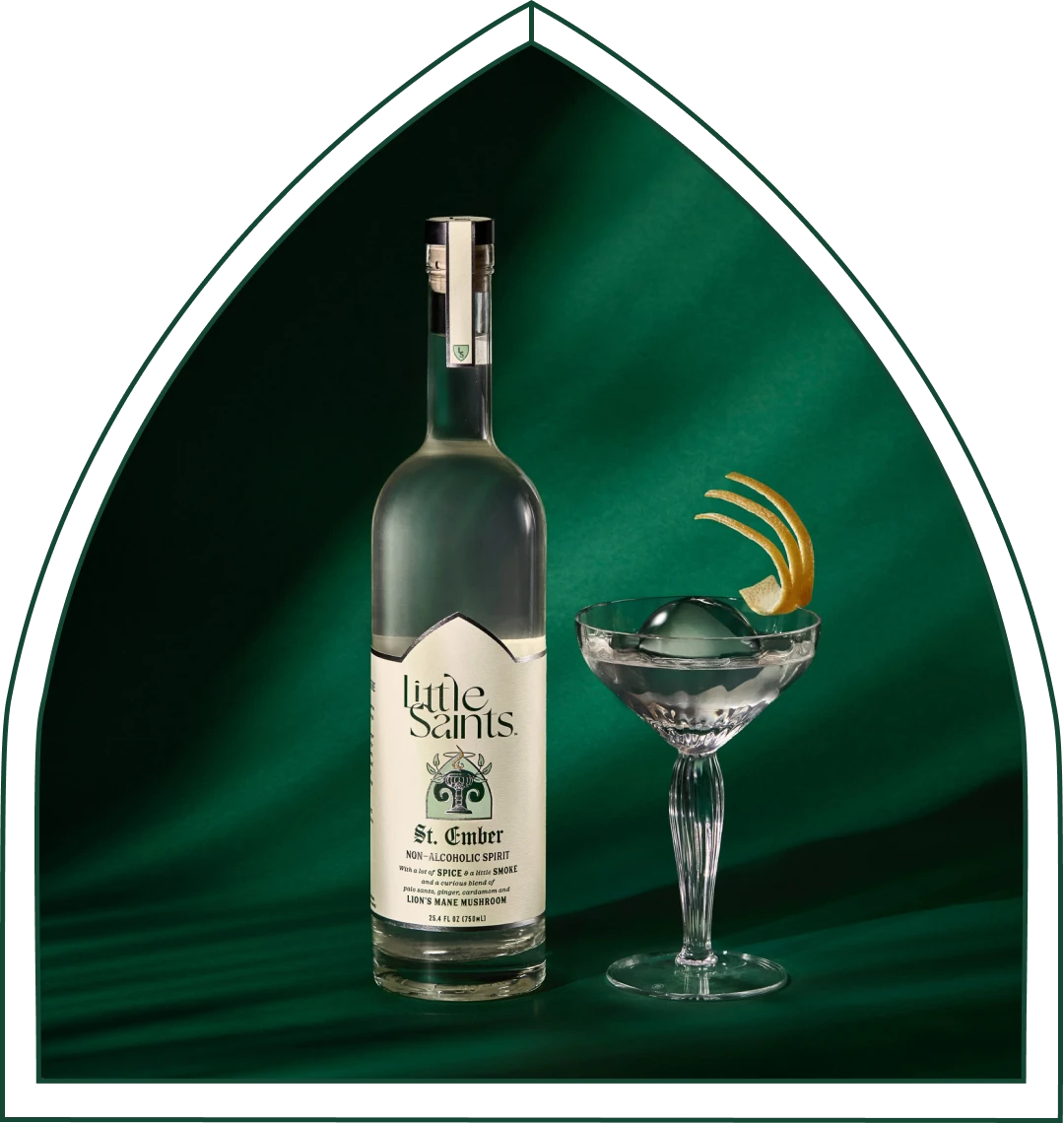
The built-in burn and natural viscosity from the mushroom extract give it heat at the back of the throat and weight in the mouth, so the drink feels like a cocktail instead of a soft drink. St. Ember carries 100mg of organic Lion's Mane extract at a minimum of 70% beta glucan, documented by supplier certificates of analysis. One percent of St. Ember proceeds support reforestation in Peru.
Exact Margarita Builds To Follow
Classic Mezcal Margarita
- 2 oz mezcal
- 1 oz fresh lime juice
- 0.5 oz orange liqueur
- 0.25 oz agave syrup
- Salt rim, lime wheel garnish
Combine all ingredients in a shaker with ice. Shake hard for 15 seconds until the shaker frosts. Strain into a rocks glass over a large cube. Garnish with a lime wheel.
Tequila-Plus-Smoke Margarita
- 1.5 oz blanco tequila
- 0.25 oz peated Scotch
- 1 oz fresh lime juice
- 0.5 oz orange liqueur
- 0.25 oz agave syrup
- Salt rim, lime wheel garnish
Combine all ingredients in a shaker with ice. Shake hard for 15 seconds. Strain into a rocks glass over a large cube. Garnish with a lime wheel.
St. Ember Margarita (Non-Alcoholic)
- 2 oz Little Saints St. Ember
- 1 oz fresh lime juice
- 0.5 oz orange liqueur or 0.5 oz agave syrup
- Salt rim, lime wheel garnish
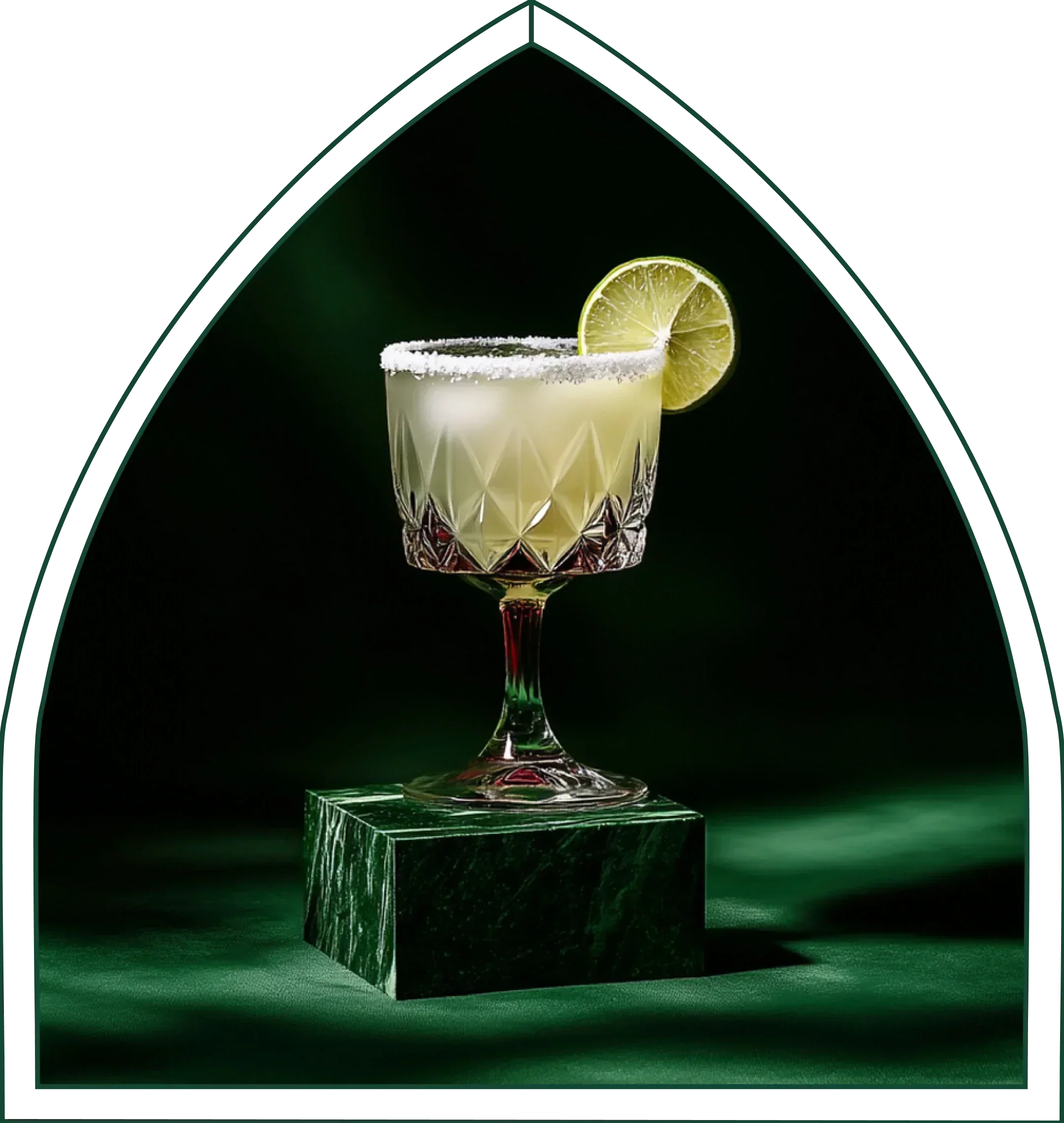
Combine all ingredients in a shaker with ice. Shake hard for 15 seconds. Strain into a rocks glass over a large cube. Garnish with a lime wheel. St. Ember carries zero sugar; any sweetness comes from the botanical extracts themselves.
If You Don't Have Agave Syrup
Simple syrup is the most neutral agave substitute and, according to Crafty Bartending's bartender recommendation, keeps the flavor closest to a classic margarita, though the same source notes cane syrup is arguably the closest match for replicating agave's clean sweetness and texture, with simple syrup a close second. Use 1.25× the amount of simple syrup to replace agave syrup in a margarita (e.g., 30 ml/1 oz agave becomes 37.5 ml simple syrup), since simple syrup is less sweet. Honey syrup made with 3 parts honey to 1 part warm water by weight adds floral notes and pairs well with tequila, as in Difford's Guide Honey Margarita; this is one recommended ratio, with 1:1 and 2:1 also used. Maple syrup creates a deeper, warmer sweetness and works better with reposado tequila than with blanco tequila, though it works best with añejo tequila.
Why Drinkers Seek Mezcal Alternatives
The evening occasion used to belong almost entirely to alcohol: the end-of-day wind-down, the social hour, the ritual of a drink in hand. More people now alternate between alcoholic and non-alcoholic options within the same occasion, a behavior called zebra striping.
This shift is driven by moderation. 47% of on-premise visitors mix alcoholic and non-alcoholic options in the same occasion, and 93% of non-alcohol buyers also purchase alcohol. People want options that keep them at the table.
Non-alcoholic spirits represent only about 6% of non-alcohol sales but are growing at roughly 70%, which makes them the fastest-moving segment in the category. According to FORM's analysis of Google search interest from March 2025 to March 2026, the margarita ranks fourth among America's most-searched cocktails, with an average interest score of 44.51 and a peak of 80. The mezcal margarita is where the flavor-forward drinker lives, particularly as the most ordered mezcal cocktail on American menus during the 2010–2020 mezcal boom and the most popular mezcal drink in the world.
Frequently Asked Questions
What Can I Use Instead Of Mezcal In A Margarita?
The closest approximation uses a split base of blanco tequila and peated Scotch (1.5 oz tequila + 0.25 oz Scotch). You can also substitute blanco tequila, reposado tequila, sotol, raicilla, or bacanora 1:1. For a non-alcoholic option, try Almave Humo or Little Saints St. Ember, which both mix 1:1.
What Tequila Is Closest To Mezcal?
Blanco tequila is the purest expression of blue agave character among tequila styles, though it lacks smoke. Reposado adds oak-derived notes that partially fill the gap. For a closer mezcal-like profile without buying mezcal, use the split base of blanco tequila and peated Scotch described above.
Is Mezcal Basically Tequila?
All tequila is technically a type of mezcal, but not all mezcal is tequila. Tequila must be made from blue Weber agave (Agave tequilana Weber, blue variety) and is steam-cooked in masonry ovens or autoclaves at 100–110°C, yielding a roasted, earthy, or complex flavor profile rather than a uniformly clean, citrus-forward one. Mezcal can be made from more than 50 agave species, and its agave hearts (piñas) are traditionally roasted in wood-fired underground pit ovens lined with stone, a method that typically imparts smoky and earthy notes.
What Can I Use If I Don't Have Agave Syrup For Margaritas?
Simple syrup is the most neutral substitute. Use 1.25× the amount of simple syrup to replace agave syrup (e.g., 30 ml/1 oz agave becomes 37.5 ml simple syrup). Honey syrup adds floral notes. Maple syrup creates a deeper, warmer sweetness and works better with reposado tequila than with blanco tequila, and it works best with añejo tequila.
Is There A Non-Alcoholic Mezcal Alternative For Margaritas?
Yes. Almave Humo is a benchmark non-alcoholic mezcal alternative and works well in a smoky margarita. Little Saints St. Ember is another option. It is an ode to the flavors of a light, spicy mezcal and mixes 1:1 in a margarita, so two ounces replaces two ounces. It is built on palo santo, ginger, and cardamom, with oil-based craft extracts that give it the body and burn of a spirit rather than the thinness of flavored water. It carries 100mg of organic Lion's Mane extract at a minimum of 70% beta glucan, documented by supplier certificates of analysis.
Your Margarita, Your Pour
The decision stays simple. If you want smoke and you are drinking alcohol, use a split base of blanco tequila and peated Scotch. If you want agave character without smoke, use blanco or reposado tequila. If you are not drinking alcohol, use Little Saints St. Ember, which mixes 1:1 so two ounces replaces two ounces.
The margarita is a drink built for the evening occasion, and you now have a pour for every version of it.
These statements have not been evaluated by the FDA. This product is not intended to diagnose, treat, cure or prevent any disease. Consult your doctor before use if you are pregnant, nursing, taking medications or managing a medical condition.
The statements made on our website have not been evaluated by the Food and Drug Administration, Our products are not intended to diagnose, treat, cure or prevent any disease. If you are pregnant, nursing, taking any medications or have any medical conditions, consult your doctor before use.