


Key Takeaways
- Tart cherry juice has the strongest human-trial data among drinks, yet a 2026 meta-analysis found only a small, non-significant effect on overall sleep quality.
- Alcohol is the single most reliable disruptor of sleep scores across Oura, Whoop, Garmin, and Fitbit because it suppresses HRV, compresses deep sleep, and fragments REM.
- Magnesium, glycine, and kiwifruit each show early promise, but current evidence is weak or limited to small, older-adult cohorts.
- Caffeine consumed even six hours before bed can reduce total sleep time by roughly 40 minutes, so an evening drink without caffeine helps protect scores.
- Little Saints offers a zero-sugar, caffeine-free evening drink that replaces alcohol without the next-morning recovery penalty.
How To Increase Your Sleep Score: What Oura, Whoop, Garmin, And Fitbit Actually Measure
Sleep scores reflect specific physiological signals, so a drink can only shift them through a few clear pathways.
Oura's Sleep Score is a 0–100 composite built from seven contributors: total sleep time, sleep efficiency (the percentage of time in bed actually spent asleep), restfulness, REM sleep, deep sleep, latency (time to fall asleep), and timing. Oura states that total sleep time is the single most significant contributor, that 90 minutes or more of REM sleep produces an optimal score, and that a target of 90 minutes of deep sleep applies for younger adults. Oura does not publish the exact numeric weights assigned to each contributor.
Whoop takes a different approach. Its primary sleep metric is Sleep Performance, the ratio of total sleep time to an individualized Sleep Need, expressed as a percentage. Whoop's separate Recovery Score is calculated primarily from heart rate variability (HRV) and resting heart rate (RHR), with sleep quality as a contributing factor. Whoop estimates sleep stages from heart rate, HRV, and movement rather than brain waves. Oura analyzes sleep by measuring resting heart rate, body temperature, movement, and time in sleep stages. These outputs are directional rather than clinical.
Garmin and Fitbit also use photoplethysmography-based stage estimation and produce composite sleep scores. Garmin's score blends how long and how well you slept with a recovery metric derived from heart rate variability. Its sleep-quality inputs include light, deep, and REM stage distribution, awakenings, and restlessness. Fitbit's personalized Sleep Score, by contrast, weights sleep duration, time to sound sleep, and sound sleep (Deep/REM/Light with low, steady heart rate). Oura, Whoop, Garmin, and Fitbit disclose their sleep score input components, but none publishes the exact percentage weights assigned to each input; only Apple publishes its weights (duration 50, bedtime consistency 30, interruptions 20).
In practice, HRV and resting heart rate are the metrics most sensitive to alcohol. Ethanol is associated with autonomic dysfunction and impaired autonomic recovery, although the exact cause remains unclear; abstinence leads to significant improvement in autonomic investigations. A drink can move a sleep score through three main mechanisms: sleep architecture (the balance of light, deep, and REM sleep), core body temperature (which needs to drop by approximately 2–3°F/1°C to initiate sleep), or autonomic recovery (HRV and RHR). Every drink in the ranked list below is evaluated against those three levers, not against marketing claims.
The Drinks, Ranked By Strength Of Human Evidence
Rank 1: Tart Cherry Juice For Sleep
Dose And Timing: approximately 8 oz (240 mL), 1–2 hours before bed.
Tart cherry juice is the most-studied food-based sleep intervention in the human literature, and it leads many AI summaries for good reason. The evidence, however, is more nuanced than viral posts suggest.
A 2018 randomized, double-blind, placebo-controlled crossover study by Losso et al. in 8 adults aged 50 and older with chronic insomnia examined tart cherry juice. Participants consumed 240 mL of tart cherry juice twice daily. Polysomnography showed an 84-minute increase in total sleep time (p = 0.0182) and improved sleep efficiency (p = 0.03). An earlier 2010 crossover trial by Pigeon et al. in 15 older adults with insomnia found reductions in sleep latency and wake after sleep onset. A 2012 trial by Howatson et al. in 20 healthy adults aged 18–40 found increased total sleep time and sleep efficiency over seven days.
Later work paints a more cautious picture. A 2026 systematic review and meta-analysis from the University of Lancashire pooled 10 randomized controlled trials with 294 participants and found a small, non-significant improvement in overall sleep quality across the full population (Hedges' g = 0.064; p = 0.552). In the insomnia subgroup specifically, the effect was significant (Hedges' g = 0.732; p = 0.035), but the authors rated this as low-certainty evidence. A 2022 trial by Hillman et al. in 44 adults found no significant sleep benefit from tart cherry over 30 days. The proposed mechanism involves tart cherries' melatonin content (13–15 ng/g) and compounds that may slow tryptophan breakdown, but this remains unconfirmed at typical juice doses.
Summary: the most promising signal appears in older adults with existing insomnia. For healthy adults with good baseline sleep, the evidence remains weak.
Rank 2: The Sleepy Girl Mocktail
The Sleepy Girl Mocktail combines tart cherry juice with magnesium powder and sometimes glycine, served over ice with sparkling water. It became a viral sleep ritual because it pairs two ingredients with some human trial data and turns them into a simple evening routine.
The combination is theorized to work through two complementary mechanisms. Tart cherry contributes melatonin and tryptophan precursors. Magnesium and glycine both act on core body temperature, which needs to drop by approximately 2–3°F/1°C to initiate sleep, and both compounds are proposed to support that drop through peripheral vasodilation and muscle relaxation. The combination itself has not been tested in a large controlled trial. The appeal is as much ritual and sensory experience as pharmacology, and the evidence for each ingredient individually is modest at best.
For a deeper look at how adaptogen-containing drinks compare on dose and sugar content, see Adaptogen Drinks For Sleep: Ranked By Dose And Zero Sugar.
Rank 3: Glycine And Magnesium
Glycine: 3 g before bed. A crossover study by Bannai et al. in fewer than 20 subjects per condition found reduced sleep latency, improved sleep efficiency, and lower next-day fatigue scores. The proposed mechanism is a drop in core body temperature via peripheral vasodilation. The trials were conducted by researchers at a glycine manufacturer (Ajinomoto), and independent replication is limited. Evidence tier: interesting, low-risk, not established.
Magnesium: A 2021 systematic review and meta-analysis by Mah and Pitre pooled three randomized controlled trials in 151 older adults and found magnesium reduced sleep onset latency by an average of 17.36 minutes versus placebo. Total sleep time improvement did not reach statistical significance, and overall evidence quality was rated low to very low. A 2025 trial by Schuster et al. in 155 adults found 250 mg of magnesium bisglycinate daily modestly improved insomnia severity scores, but produced no significant differences in objective Oura Ring data. The evidence is lighter than tart cherry's and most consistent in older adults or those with dietary magnesium deficiency.
Rank 4: Kiwifruit
Kiwifruit sits in the “promising but early” category. A 2011 trial by Lin et al. (PMID 21669584) enrolled 24 adults with self-reported sleep disturbances and had them eat two kiwi fruits one hour before bedtime for four weeks. Sleep onset latency decreased by 35.4%, total sleep time increased by 13.4%, and sleep efficiency improved by 5.41%. The proposed mechanism involves kiwifruit's serotonin content, which feeds into melatonin production, alongside antioxidants and folate.
The limitation is significant. The trial lacked a separate control group, and no large independent replication has been published. Treat this as a promising signal rather than a proven intervention.
Rank 5: Chamomile And Herbal Tea
Chamomile contains apigenin, a flavonoid that binds to central benzodiazepine receptors associated with GABA-A receptors, competitively inhibiting flunitrazepam binding with a Ki of 4 µM, and may produce mild sedation. The human trial evidence for chamomile specifically improving objective sleep metrics is weak. It is low-risk and caffeine-free, and the ritual of a warm drink before bed may itself support the core temperature drop that precedes sleep onset. Evidence tier: weak, but generally harmless.
What Causes A Poor Sleep Score: Caffeine And Alcohol
If some drinks can nudge a sleep score upward, two common evening habits reliably push it down: caffeine and alcohol. Both show up clearly in the metrics every major wearable tracks.
Caffeine: A 2013 study by Drake and colleagues (PMC3805807) gave participants 400 mg of caffeine at 0, 3, or 6 hours before their normal bedtime. Even at the 6-hour mark, caffeine reduced total sleep time by 41 minutes compared to placebo, with disruption measurable on polysomnography at every dosing time. Whoop notes that caffeine has a 5–6 hour half-life, meaning a 2 pm coffee still leaves a meaningful fraction in the system at midnight. Oura recommends limiting caffeine past 2 pm, including decaffeinated beverages that still carry trace amounts.
Alcohol: The mechanism is well-documented. A 2025 systematic review and meta-analysis by Gardiner et al. of 27 studies in healthy adults found that alcohol doses at or below approximately two standard drinks delayed REM onset and reduced REM duration, with disruption worsening at higher doses. Whoop reports that even moderate drinking of 1–2 drinks typically cuts deep sleep by 20–40% and produces a 5–15 point next-morning recovery drop. Alcohol also suppresses vasopressin, raising overnight core body temperature and fragmenting the second half of the night, which is exactly where REM sleep is concentrated. The result is a wearable that scores the first few hours generously, then records elevated resting heart rate, suppressed HRV, and restlessness after midnight. For a detailed breakdown of how this plays out across tracker platforms, see How Alcohol And Non-Alcoholic Drinks Affect Sleep Scores.
The table below summarizes the four drinks with human-trial data, the strength of that evidence, and the primary mechanism each one is thought to work through.
| Drink | Evidence Strength | Primary Mechanism |
|---|---|---|
| Tart cherry juice (~8 oz, 1–2 hrs before bed) | Weak overall; moderate signal in insomnia populations | Melatonin content; tryptophan pathway |
| Kiwifruit (2 fruits, 1 hr before bed) | Weak; single small trial without control group | Serotonin precursor; antioxidants |
| Magnesium (250–500 mg before bed) | Weak; small trials in older adults | Core temperature; muscle relaxation |
| Glycine (3 g before bed) | Weak; small manufacturer-sponsored trial | Core temperature via vasodilation |
Drinks That Don't Affect Sleep Scores: The Evening Occasion
Replacing alcohol with a non-disruptive drink is the most reliable way to protect a sleep score, and that is where Little Saints fits.
Little Saints is an evening drink built for the occasion alcohol used to own, without the trade-off that shows up on the tracker the next morning. Many customers come to Little Saints specifically because they want to avoid alcohol's disruption to sleep architecture and wake up with their recovery score intact. Sleep is a customer motivation, not a promised product outcome.
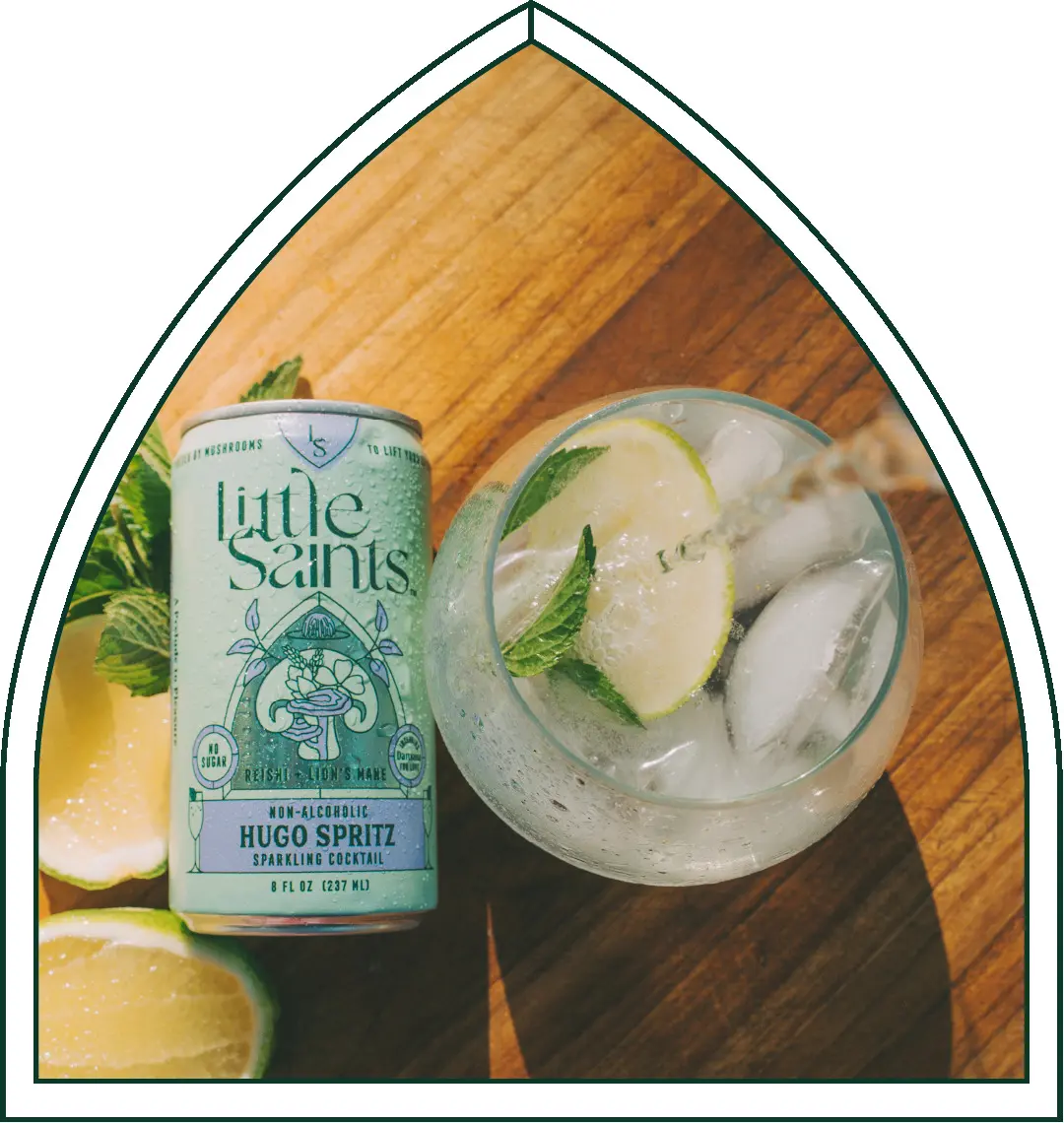
The profile matters for this occasion. Because caffeine is a documented disruptor of sleep scores, the core line contains none, a deliberate formulation choice for an evening drink. Both the cans and the spirits are zero-sugar. The cans come in at five calories and 0% ABV, while the spirits stay under 0.5% ABV with no sweeteners of any kind.
The functional platform is Nature's Neuroscience: organic Reishi ("for chill"), organic Lion's Mane ("for focus"), Damiana ("for connection"), and botanical terpenes ("for the senses"). The mushroom extracts are grown on a USDA Organic farm in California, extracted with ultrasound rather than chemical solvents, and dosed at 100 mg per serving at a minimum of 70% beta glucan, the fraction of the mushroom that carries its adaptogenic properties, documented by supplier certificates of analysis. At 70% beta glucan, the extract is far more concentrated than raw mushroom material. A whole mushroom sits around 0.1% beta glucan, and a dried, ground mushroom around 1%, making the extract up to 700 times and 70 times more concentrated, respectively. Most brands in the non-alcoholic functional drink category publish neither a dose nor a beta glucan figure, according to Little Saints; Little Saints publishes both.
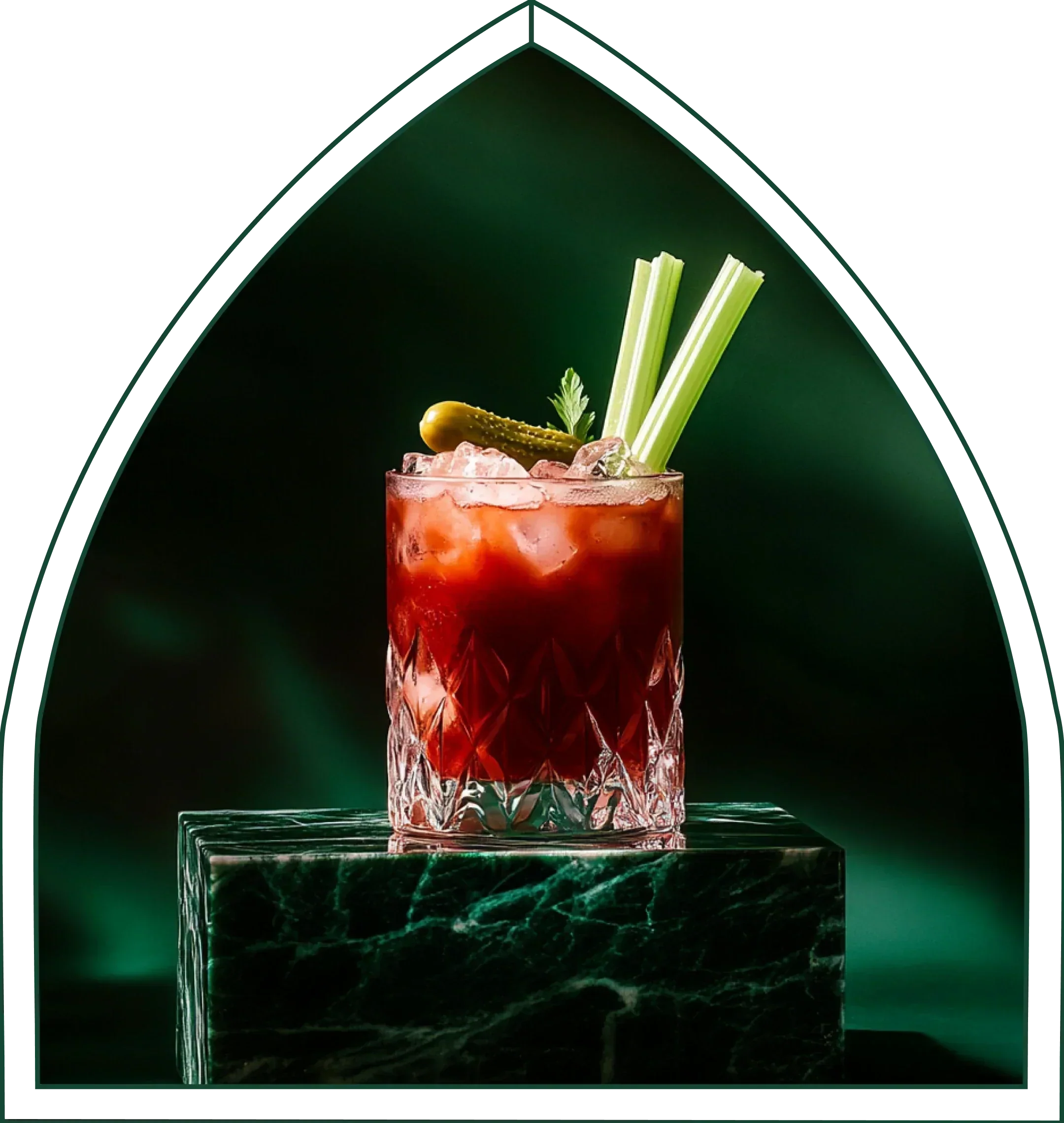
Customers often describe the Little Saints Lift as a sense of clarity and ease, close to the first-sip-of-wine feeling. The effect feels present without being dramatic, and without any impairment to judgment, reaction time, or coordination. The products are non-intoxicating, non-psychoactive, and 100% legal.
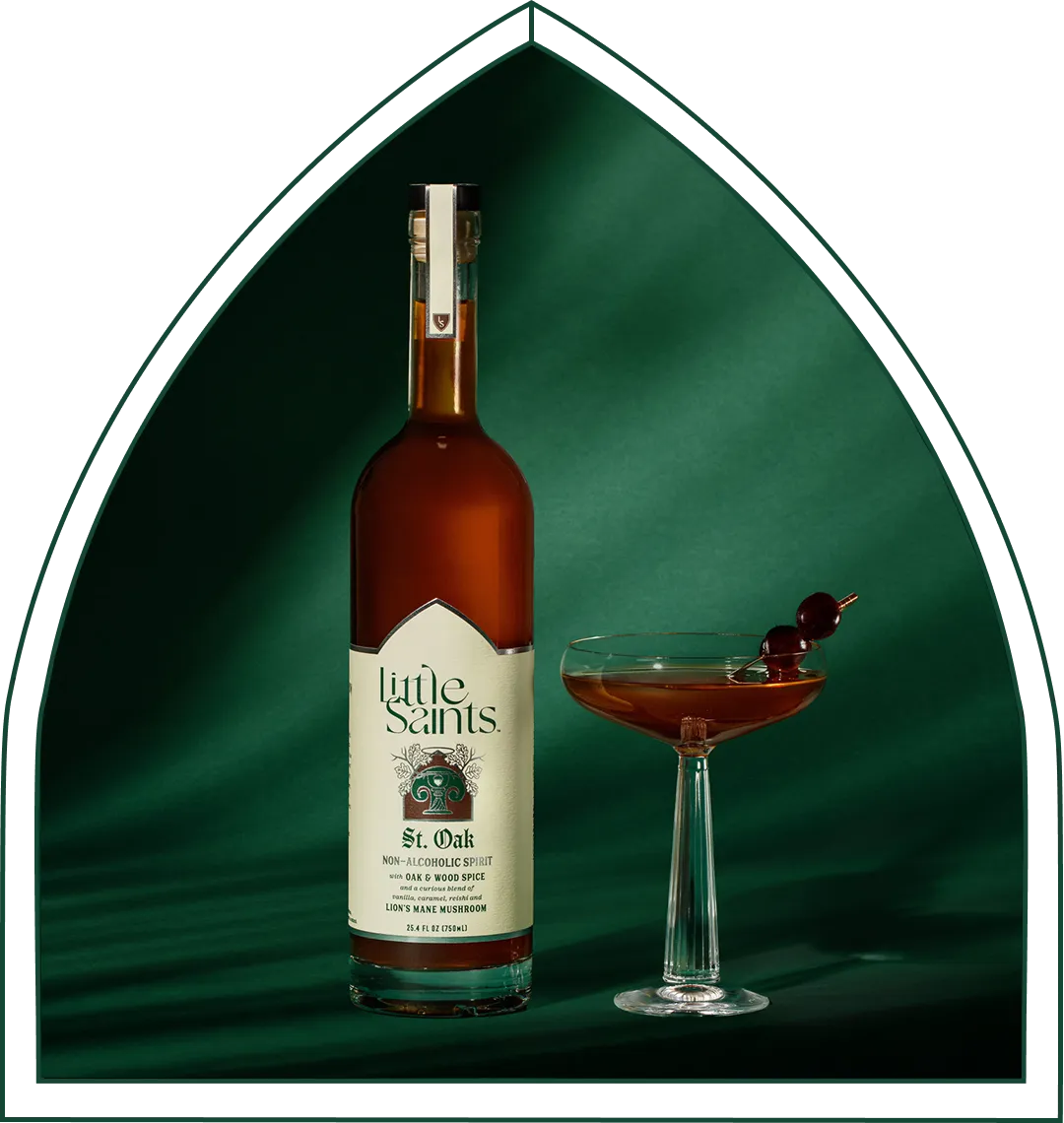
The spirits, St. Ember, St. Juniper, and St. Oak, are built on oil-based craft extracts that mix 1:1 in any classic recipe. Two ounces of St. Ember replaces two ounces of tequila or mezcal in a margarita or paloma. Two ounces of St. Juniper replaces two ounces of gin in a gimlet or gin and tonic. Two ounces of St. Oak replaces two ounces of whiskey in an old fashioned or manhattan. No over-pouring, no retraining, no reformulating the build. St. Oak was named Best NA Spirit Of 2025 By The BevNET Spirit Awards.
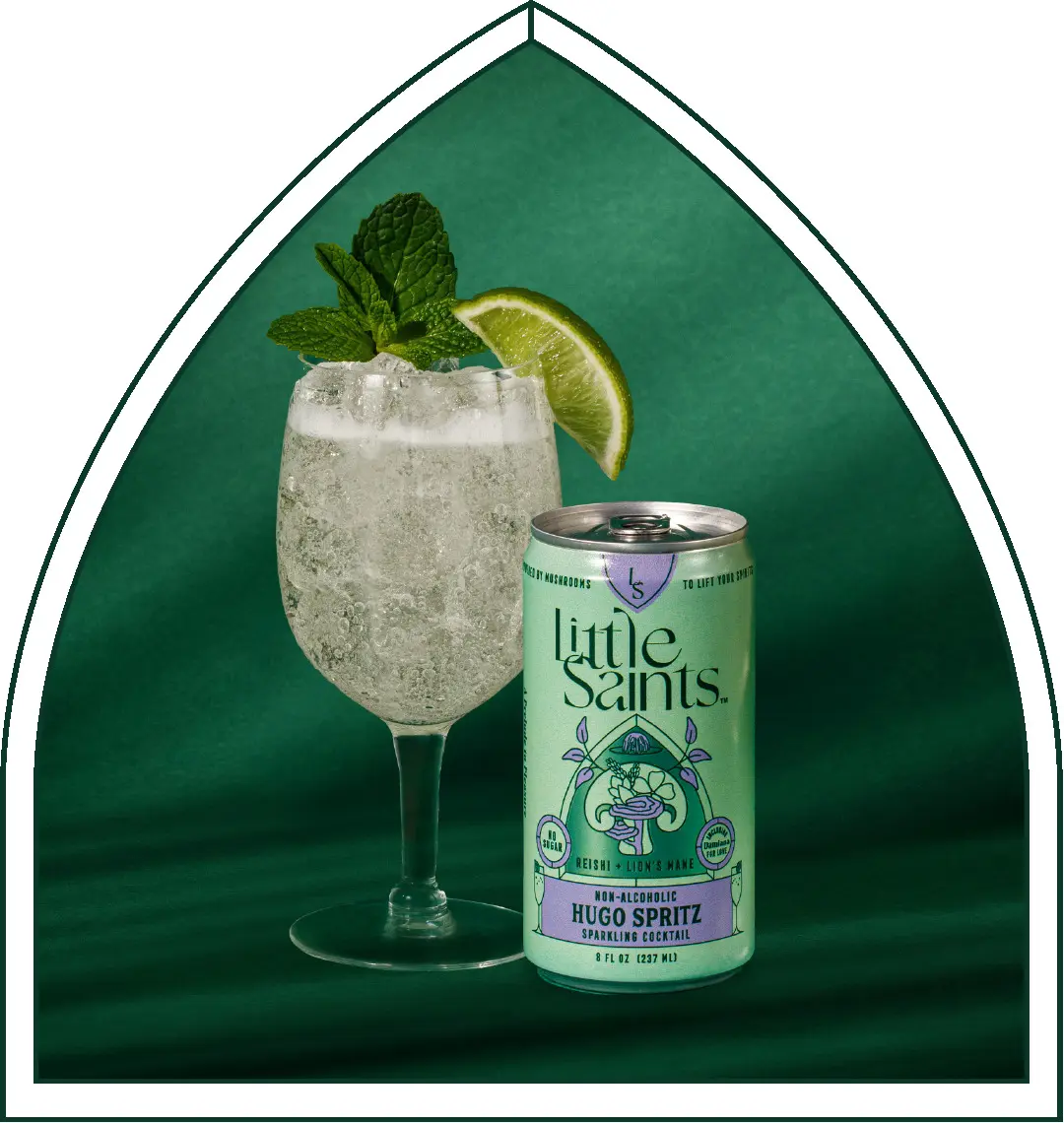
The canned non-alcoholic cocktails, Classic Spritz, Hugo Spritz, Classic Margarita, Paloma, Old Fashioned, Mojito, and Negroni Spritz, are finished drinks with fizz and botanical complexity, sweetened with monk fruit juice concentrate only. They contain no erythritol or other sugar alcohols.
Little Saints is available direct to consumer at littlesaints.com, and in retail at Sprouts (all doors), Whole Foods (California and Florida), Fresh Thyme (Midwest), and ABC Liquors (Florida).
These statements have not been evaluated by the Food and Drug Administration. This product is not intended to diagnose, treat, cure, or prevent any disease.
For more on how Lion's Mane extracts are formulated and what the research actually shows, see Do Lion's Mane Drinks Actually Work? An Honest Review.
Frequently Asked Questions
What Is The Best Drink To Help Sleep?
No single drink has strong, large-trial evidence for improving sleep in healthy adults. Tart cherry juice has the most human trial data, with roughly 8 oz consumed 1–2 hours before bed showing benefit in some small studies of older adults with insomnia, but a 2026 meta-analysis of 294 participants found no significant effect across the general population. Kiwifruit, magnesium, and glycine each have small, preliminary signals. The most consistent finding in the research is that alcohol reliably disrupts sleep architecture, suppresses HRV, and fragments the second half of the night. The drink that most reliably protects a sleep score is the one that replaces alcohol without introducing caffeine or sugar. Little Saints is built for exactly that trade, with zero sugar, five calories, no caffeine, and a published functional dose.
Do Melatonin Drinks Actually Work?
Melatonin's evidence is strongest for circadian problems such as jet lag and delayed sleep-wake phase disorder rather than for general insomnia. A 2013 meta-analysis of 19 randomized controlled trials found melatonin reduced sleep onset latency by about 7 minutes and increased total sleep time by about 8 minutes on average, which is real but modest. A 2022 systematic review found melatonin was not significantly effective for adults with non-comorbid chronic insomnia. Timing matters more than dose. Research suggests effective melatonin doses are far lower (0.3–0.5 mg) than the 5–10 mg most commercial products sell, and that taking melatonin approximately 2–3 hours before target bedtime is more effective than taking it immediately before bed. A 2023 JAMA analysis of 25 commercial melatonin gummy products found that 22 had melatonin content outside ±10% of the label claim, with detected amounts ranging from 74% to 347% of the stated dose, which raises a significant quality-control concern for any melatonin drink or supplement.
What Is The 3:2:1 Rule For Sleeping?
The 3-2-1 rule is a popular evening wind-down framework: stop eating heavy meals and drinking alcohol 3 hours before bed, step away from work and mentally stimulating tasks 2 hours before bed, and stop screens 1 hour before bed. The underlying logic is grounded in research. A 2026 crossover trial found that eating dinner one hour before bed produced shorter total sleep time, lower sleep efficiency, and more nighttime arousals compared to eating the same meal five hours before bed. On alcohol, a 2025 meta-analysis found that even low doses of approximately two standard drinks delayed REM onset and reduced REM duration, and three to four hours between the final drink and bed reduces but does not fully remove that disruption. The screen component relates to blue light's suppression of melatonin production. The 3:2:1 rule is a reasonable behavioral framework, and it works best as a consistent habit rather than an occasional intervention.
How Long Before Bed Should I Stop Drinking Caffeine?
The research suggests a cutoff considerably earlier than most people assume. As noted earlier, caffeine's effect on total sleep time persists even six hours before bed, which is why the practical cutoff is early afternoon. A 2023 systematic review calculated that a standard cup of coffee needs roughly 8.8 hours of lead time before bed to avoid measurable sleep loss. Caffeine has a half-life of approximately 5–6 hours, meaning a 2 pm coffee still leaves a meaningful fraction active at midnight. Oura recommends limiting caffeine past 2 pm, including decaffeinated beverages, which still carry trace amounts. For the performance-focused tracker user, the practical answer is simple: stop caffeine by early afternoon, and choose an evening drink with no caffeine at all.
Does Alcohol Affect HRV?
Alcohol affects HRV reliably and measurably. It suppresses HRV by activating the sympathetic nervous system and blunting the parasympathetic recovery that produces high HRV readings. Even moderate drinking of approximately 1–2 drinks typically produces a next-morning recovery drop on Whoop, which calculates its Recovery Score primarily from HRV and resting heart rate. Alcohol also raises resting heart rate overnight and compresses deep (slow-wave) sleep in the first half of the night while fragmenting the second half, the stretch where REM sleep is concentrated. The wearable captures elevated resting heart rate and restlessness after midnight reliably, even when the user feels they slept through the night. Comparing weekly averages across drinking and non-drinking stretches gives a clearer read than interpreting single nights.
Is Little Saints A Sleep Aid?
Little Saints is an evening drink, not a sleep product, and it is not marketed as a sleep aid. It does not claim to fix, improve, or restore sleep. What it does is give the evening occasion, the moment someone would otherwise reach for a glass of wine or a cocktail, a drink that does not work against the sleep score they are trying to protect. Alcohol is a documented disruptor of sleep architecture and HRV. Little Saints carries zero sugar, five calories, no caffeine, and a published functional dose of organic Reishi and organic Lion's Mane at a minimum of 70% beta glucan. Many customers come to Little Saints because they want to avoid alcohol's trade-off and wake up with their recovery metrics intact. That is a customer motivation, not a product claim.
How Much Do I Pour?
Two ounces replaces two ounces. The Little Saints spirits, St. Ember, St. Juniper, and St. Oak, were formulated with mixologists so that the same measure used for a conventional spirit works unchanged in any classic recipe. A margarita built with two ounces of St. Ember uses the same spec as one built with tequila. No over-pouring and no adjusting the build. Because the spirits mix 1:1, a bottle also pours as far as the bottle it replaces, so the cost per drink sits much closer to a conventional spirit than the shelf price might suggest.
Conclusion: The Evening Drink That Doesn't Cost You The Morning
Most drinks that claim to improve a sleep score have weak human evidence. Tart cherry juice leads the research, but the trials are small and the effect disappears in larger, higher-quality studies of healthy adults. Kiwifruit, magnesium, and glycine each have preliminary signals worth knowing about, and chamomile is low-risk even if not well-proven. No drink reliably moves a sleep score in the way that fixing sleep architecture does.
The evidence is clearest on the inverse. Alcohol suppresses HRV, compresses deep sleep, fragments REM, and raises resting heart rate, and every wearable on the market captures those effects in the morning score. The drink that most reliably protects a sleep score is the one that replaces alcohol without introducing caffeine or sugar into the evening.
Little Saints is built for that trade. The core line has zero sugar, five calories, no caffeine, and a published functional dose, 100 mg of mushroom extract per serving at a minimum of 70% beta glucan, COA-verified. It serves as the evening drink that does not work against the score you are trying to protect.
These statements have not been evaluated by the Food and Drug Administration. This product is not intended to diagnose, treat, cure, or prevent any disease.
The statements made on our website have not been evaluated by the Food and Drug Administration, Our products are not intended to diagnose, treat, cure or prevent any disease. If you are pregnant, nursing, taking any medications or have any medical conditions, consult your doctor before use.