


Last updated: October 16, 2026
Key Takeaways
- Many non-alcoholic drinks marketed as healthy alternatives still contain high total carbohydrates that spike blood sugar, even when labeled "0g sugar."
- Apply a three-part filter: check total carbohydrates first, verify no added sugar, and confirm low glycemic impact before choosing any drink.
- Common traps like tonic water, ginger beer, sweetened kombucha, and non-alcoholic beer can carry 5–56g of carbohydrates per serving despite "alcohol-free" claims.
- Safe options include plain or sparkling water, unsweetened tea or coffee, zero-sugar non-alcoholic spirits with soda water, and carefully vetted low-sugar canned cocktails.
- Little Saints offers zero-sugar, low-calorie canned cocktails and spirits that pass all three criteria without spiking blood sugar.
The Three Criteria That Actually Matter
Use a simple three-part filter before you even read the ingredient list on any non-alcoholic drink.
- Zero Or Near-Zero Total Carbohydrates: Total carbohydrates, not just the sugar line, drive blood glucose. Under FDA rules (21 CFR 101.60(c)), a drink may be labeled as containing 0 g of sugar if it has less than 0.5 g of sugars per serving, while still carrying 15 g of total carbohydrates from non-sugar sources such as starch, maltose, or dextrins. The total carbohydrate line is the number that matters.
- No Added Sugar: Under FDA rules, the "No Added Sugar" label claim means no sugar or sugar-containing ingredient, such as jam, jelly, or concentrated fruit juice, was added during processing. This claim does not guarantee the drink is free of naturally occurring sugars or refined starches that raise blood glucose. Treat it as a helpful signal, not a complete answer.
- Low Glycemic Impact: A drink should not cause a rapid rise in blood glucose. The type and amount of carbohydrate present determine that outcome, not the sugar line alone. In non-alcoholic beer produced by stopped fermentation, residual maltose and other fermentable sugars are not required to be listed as "sugar" under EU food labeling rules, yet they are rapidly absorbed and can significantly raise blood glucose.
Learn what zero-calorie alcohol alternatives actually contain to apply this filter consistently.
Now that you know the three criteria, see how they show up on real labels.
What To Look For On A Non-Alcoholic Drink Label
The gap between "total carbohydrates" and the "sugar" line on a nutrition label causes most of the confusion. On the Nutrition Facts label, Total Carbohydrate includes dietary fiber, total sugars, and sugar alcohols (with added sugars included under total sugars), and starch can raise blood glucose even when a product lists 0g of sugar. The sugar line is a subset of total carbohydrates, not a replacement for it.
A drink containing only 2g of sugar can still produce a meaningful glucose response if its carbohydrate base is maltose, dextrins, or refined starch. Human jejunal perfusion studies show that maltose, maltotriose, and α-limit dextrins from starch hydrolysates are hydrolysed and absorbed as glucose at rates equal to or faster than free glucose, though these studies used much higher carbohydrate loads than 2g. Maltose, dextrins, and refined starch do not qualify as "added sugar" under FDA labeling rules when the sugars are produced through incidental hydrolysis of complex carbohydrates, but sugars specifically and purposely produced via hydrolysis (such as sugar syrup types) or added as an ingredient must be declared as added sugars. The American Diabetes Association's nutrition therapy guidance identifies the total amount of carbohydrate eaten as the primary predictor of glycemic response and recommends monitoring total carbohydrate intake, rather than net carbs or the sugar line alone, while individual goals should be personalized.
Terms such as "alcohol-free," "low sugar," and "better-for-you" are marketing descriptions governed by labeling and advertising rules, not regulated guarantees about glucose or blood-sugar outcomes. A drink can carry all three label claims and still spike blood sugar. Beverages with "better-for-you" features such as "no added sugar" can still be high in free sugar, and 85.8% of beverages with high or very high sugar content carried a better-for-you feature, while 34.3% displayed a "no added sugar" claim.
Use a simple aisle rule. Check total carbohydrates first. If a serving contains more than 5g of total carbohydrates, treat it like a food and factor it into the meal. Then check the ingredient list for syrups, starches, and sugar alcohols, particularly maltitol. Crystalline maltitol has a glycemic index of approximately 35, while maltitol syrup has a higher glycemic index of about 52, and maltitol still counts as a carbohydrate that raises blood glucose levels, though less dramatically than standard sugar, even when it appears in "sugar-free" products.
The Traps: Drinks That Still Spike Blood Sugar
Several drink categories are marketed as healthier options yet carry enough carbohydrates to produce a significant glucose response. Each has a specific reason for its glycemic impact.
- Tonic Water: Usually sweetened with high-fructose corn syrup or sugar, though some brands use cane sugar, agave nectar, or artificial sweeteners. A standard 12 oz serving can contain 30g or more of carbohydrates. Regular tonic water is nutritionally a sugar-sweetened soft drink, falling into the same category as soda because it contains added sugar or other sweeteners.
- Ginger Beer: A standard 12-ounce bottle of commercial ginger beer typically contains around 35 to 56 grams of sugar, with a UK survey finding an average of 38.5±9.9 g of free sugars per 330 mL (about 12 fl oz). A 2016 BMJ Open survey of UK carbonated sugar-sweetened beverages found that ginger beer's sugar content, averaging 38.5±9.9 g per 330 mL, is comparable to regular cola at 35.0±1.1 g per 330 mL and is the highest-sugar flavour surveyed. In typical commercial ginger beer, this sugar load offsets ginger's potential benefits, so such drinks work best as occasional treats or as options replaced with sugar-free or low-sugar versions.
- Ginger Ale: Modern ginger ale and ginger beer are similar soft drinks made with carbonated water, sugar, and ginger, but ginger ale is a sugar-sweetened soda with only a faint ginger flavor and often little actual ginger, whereas ginger beer is stronger-tasting and spicier. For most commercial ginger ales, which contain little to no real ginger and at least 10 teaspoons of sugar, the ginger content does not offset the sugar load, though some specialty brands with real ginger may offset only some of the sugar.
- Sweetened Kombucha: Many mass-market and fruit-forward commercial kombuchas (such as Health-Ade fruit flavors, KeVita, and Humm) carry roughly 8–18g of sugar per bottle, while dry-ferment brands like GT's and Brew Dr. typically contain only 3–8g per bottle. Kombucha products are not metabolically interchangeable, because commercial products vary widely in residual sugar content and fermentation extent, and glycemic and insulin responses cannot be generalized across kombucha beverages. The label must be checked for each product individually.
- Non-Alcoholic Beer: A 2022 study published in Nutrients noted that regular alcohol-free beer has a relatively high glycemic index, estimated at 80, due to its starch and oligosaccharide (maltose, maltotriose) content, though this value is an estimate rather than a direct measurement from the study's healthy volunteers. Even products labeled "0g sugar" can carry roughly 5–16g of carbohydrates per 330ml can from residual maltose and dextrins, since alcohol-free beers typically contain about twice the total carbohydrates of alcohol-containing beers.
- Pre-Made Mixers: Margarita mixes, sour mixes, and similar pre-batched products are frequently loaded with sugar and syrups. A single serving of pre-made mixers can carry 25–50g of carbohydrates, though many mixers contain far less, ranging from about 5g to 23g per serving.
Is Ginger Ale Safe For People With Diabetes?
Standard commercial ginger ale does not qualify as a blood-sugar-friendly drink. A 12-ounce can of ginger ale typically contains roughly 30–40 grams of sugar, though the exact amount varies by brand (for example, Canada Dry has 33 g, Schweppes has 33 g, and some store brands have up to 37 g). Regular sugar-sweetened ginger ale is comparable to regular soda in its sugar content and its ability to spike blood sugar, containing about 32 g of sugar per can versus 39 g in a can of Coca-Cola, while diet or zero-sugar ginger ale does not have this effect. Most commercial ginger ale contains minimal ginger, such as Canada Dry's U.S. cans, which list "less than two per cent" ginger extract, and Canadian court documents claimed just one drop of ginger oleoresin per roughly 70 cans, which does not offset the drink's sugar load of about 10 teaspoons per can, though some specialty brands like Reed's do contain real ginger. Ginger ale is typically a sweetened carbonated beverage flavored with ginger, while diet varieties are sweetened with artificial or calorie-free sweeteners instead of sugar.
Can Type 2 Diabetics Drink Alcohol-Free Beer?
People with type 2 diabetes can include alcohol-free beer, but they need to track the carbohydrates. Alcohol-free beer still contains carbs, and the "0g sugar" label can mislead. A 2025 investigator-blinded, single-center randomized trial in Nutrients found that in 44 healthy young men who consumed 660 mL daily for 4 weeks, mixed beer increased fasting glucose and triglycerides and wheat beer increased insulin, C-peptide, and triglycerides, while pilsener and water did not significantly affect glucose metabolism. For non-alcoholic beers, style and formulation, including raw materials such as rye, wheat, rice, or maize and post-processing methods such as dry hopping or additive flavour compounds, shape sensory and physicochemical profiles and consumer liking. As noted earlier, non-alcoholic beer can carry 5–16g of carbohydrates per can, so the total carbohydrate line deserves attention.
Now that you have seen the main traps, you can focus on drinks that keep blood sugar steady.
What Drinks Will Not Spike Blood Sugar?
The following options carry zero or near-zero carbohydrates and produce no meaningful glycemic response when consumed without added syrups or sweeteners.
- Plain Or Sparkling Water: Plain sparkling water, such as seltzer, club soda, and sparkling mineral water, has zero carbohydrates, zero calories, and no glycemic impact, while sweetened varieties like tonic water contain significant calories and carbohydrates. The 2025–2030 Dietary Guidelines for Americans recommend choosing water, still or sparkling, and unsweetened beverages, with water as the primary beverage of choice for people of all ages beginning at 12 months of age. Water is considered the ideal standard beverage in dietary recommendations for people with type 2 diabetes, though a 2025 randomized trial (SODAS) found that substituting water for artificially sweetened beverages did not improve glycemic control over 24 weeks.
- Unsweetened Tea Or Coffee: Unsweetened tea contains 0 g of carbohydrates per 100 g, while black coffee without sugar contains about 0.3 g per 100 g, so both are effectively very low in carbohydrates when consumed without sugar, syrups, or high-carb milk additions. Among U.S. adults aged 20 and older, coffee and tea accounted for 20.1% of total nonalcoholic beverage consumption during August 2021–August 2023, though prepared versions may contain added sweeteners.
- Zero-Sugar Non-Alcoholic Spirits With Soda Water: Zero-sugar non-alcoholic spirits, such as Clean V, SOBER, Freely G-dry, and JNPR n°1–3, contain 0g of sugar and are designed to be mixed with soda water; however, not all non-alcoholic spirits are sugar-free, as some, including Ritual, contain 0–2g sugar per serving. The key is verifying the spirit's total carbohydrate count, not just the sugar line.
- Low-Sugar Kombucha: Choose products with less than 5g of sugar per serving and confirm the total carbohydrate count. Not all kombuchas qualify as low-sugar: OCU's analysis of 90 supermarket kombuchas found an average of 2.6 g sugar/100 ml, with acceptable levels up to 5.7 g/100 ml.
- Zero-Sugar Canned Non-Alcoholic Cocktails: Zero-sugar canned non-alcoholic cocktails publish 0g of sugar and a low calorie count per can, such as Elta Ego Zero Sugar Cosmopolitan (0g sugars, 13 calories, 0.00% Alc/Vol); they may use various non-sugar sweeteners, including monk fruit or artificial sweeteners like aspartame and acesulfame K.
- Spirits With Sugar-Free Mixers (If Drinking Alcohol): Vodka soda with lime, gin with diet tonic, and tequila with soda water keep carbohydrates low. Plain distilled spirits contain zero carbohydrates per 1.5-ounce serving. The carbohydrates in mixed drinks come from the mixer, including liqueurs and sweetened bases, since distilled spirits such as vodka, rum, whiskey, gin, and tequila contain no carbohydrates after distillation.
- Dry Wine (If Drinking Alcohol): A 5-ounce glass of dry wine contains approximately 3–4 grams of carbohydrates, with the American Diabetes Association citing roughly 4 grams. Sweet wines, dessert wines, and sangria can carry roughly 12–22g of carbohydrates per serving, with dessert wines at 12–20g per 2 oz and sangria at 15–22g per 200 ml.
What To Drink At A Bar Or Party When You're Watching Blood Sugar
Social situations feel easier when you have a clear plan for what to order, what to bring, and how to stay included.
- At A Bar: Start by asking for a non-alcoholic spirit with soda water and lime. If the bar does not carry one, a club soda with a lime wedge is a safe fallback. Avoid anything poured from a gun or made with a pre-batched mix, because both are likely to contain sugar. Before ordering anything unfamiliar, ask the bartender whether the cocktail is made with juice or sour mix, and whether the tonic is regular or diet.
- At A Party: Bring your own option. A 4-pack of a zero-sugar non-alcoholic cocktail gives you something sophisticated to hold. It also sidesteps social questions, because the drink in hand answers them before they come up. NIQ data show that 47% of on-premise visitors mix alcoholic and non-alcoholic options in the same occasion, a behavior known as zebra striping that now sits firmly in the mainstream.
- Evening Wind-Down: Sparkling water lacks the ritual, adult flavor, and aroma that make a drink feel like an occasion. A zero-sugar non-alcoholic cocktail with a functional blend provides the ritual and the sensory experience without the glucose spike. The drink that keeps someone at the table, rather than reaching for plain water, solves the real problem.
Little Saints: A Non-Alcoholic Drink That Passes The Filter
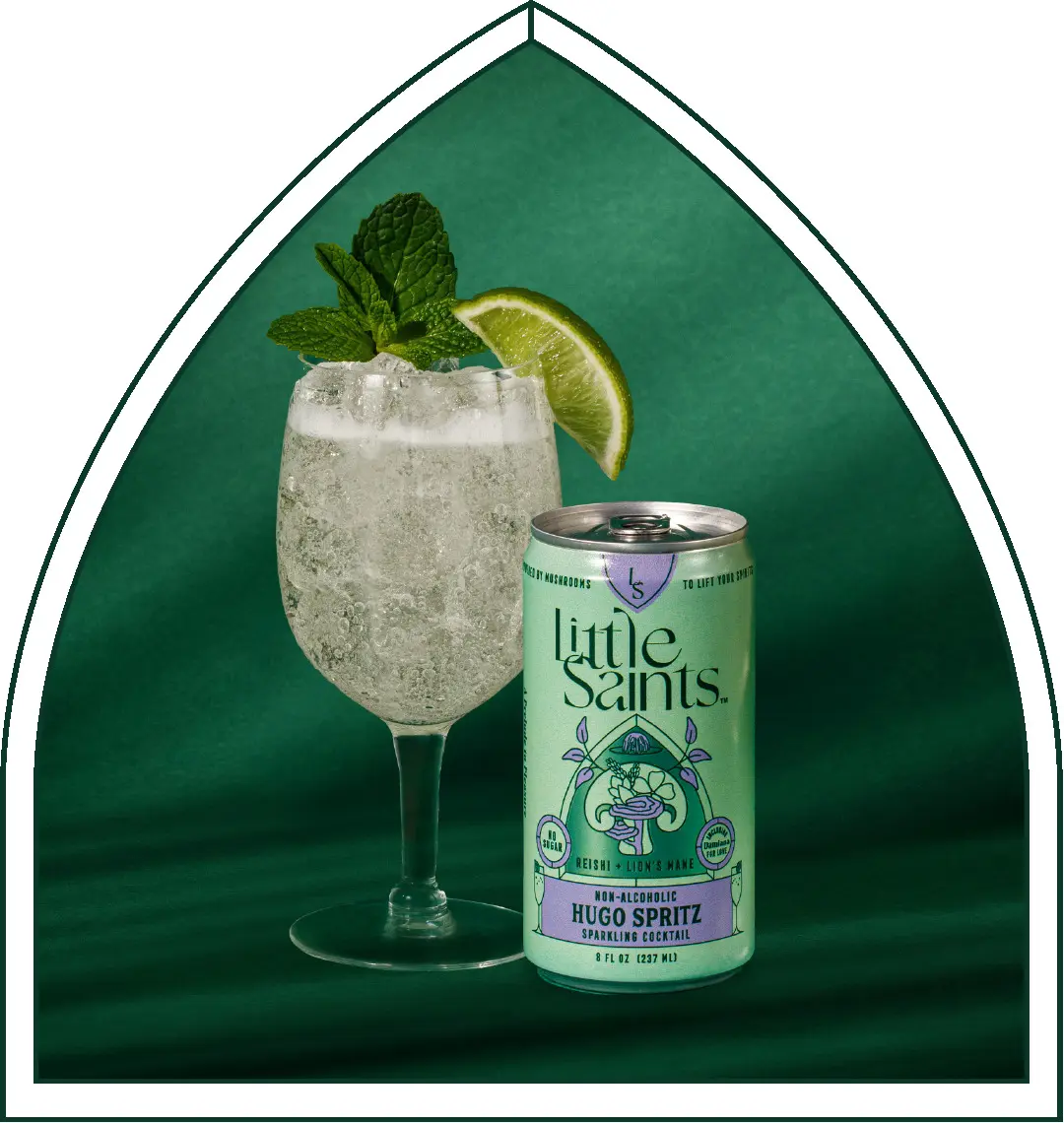
Little Saints shows how a non-alcoholic drink can clear all three criteria: zero grams of sugar, five calories per can, and a label you can verify. The canned cocktails (Classic Spritz, Hugo Spritz, Classic Margarita, Paloma, Old Fashioned, Mojito, and Negroni Spritz) are sweetened only with monk fruit juice concentrate. They contain no cane sugar, erythritol, or sugar alcohols. This approach produces five calories per 8 oz can and 0 g sugar, sweetened with monk fruit juice concentrate, which implies zero glycemic impact from sweeteners.
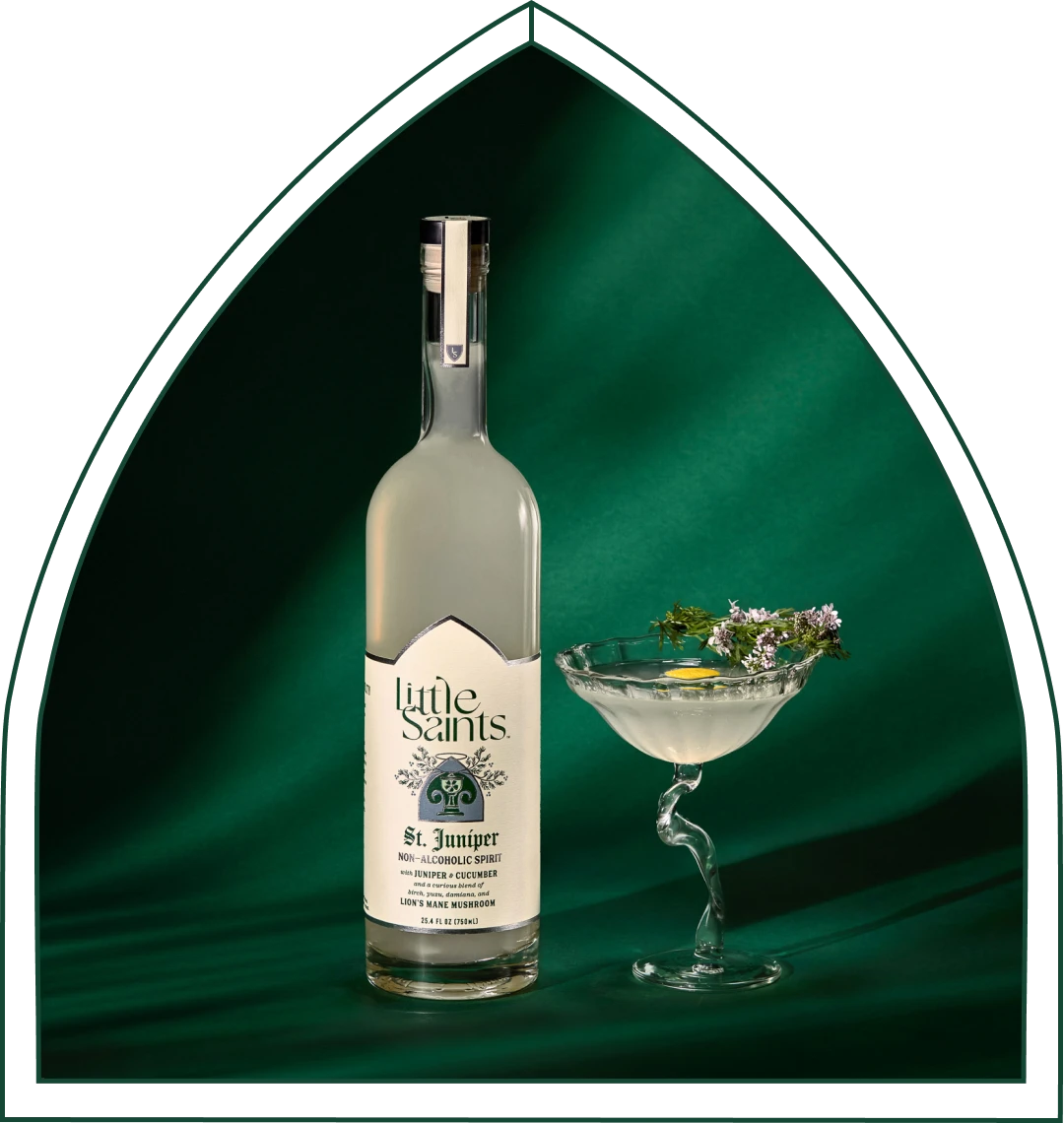
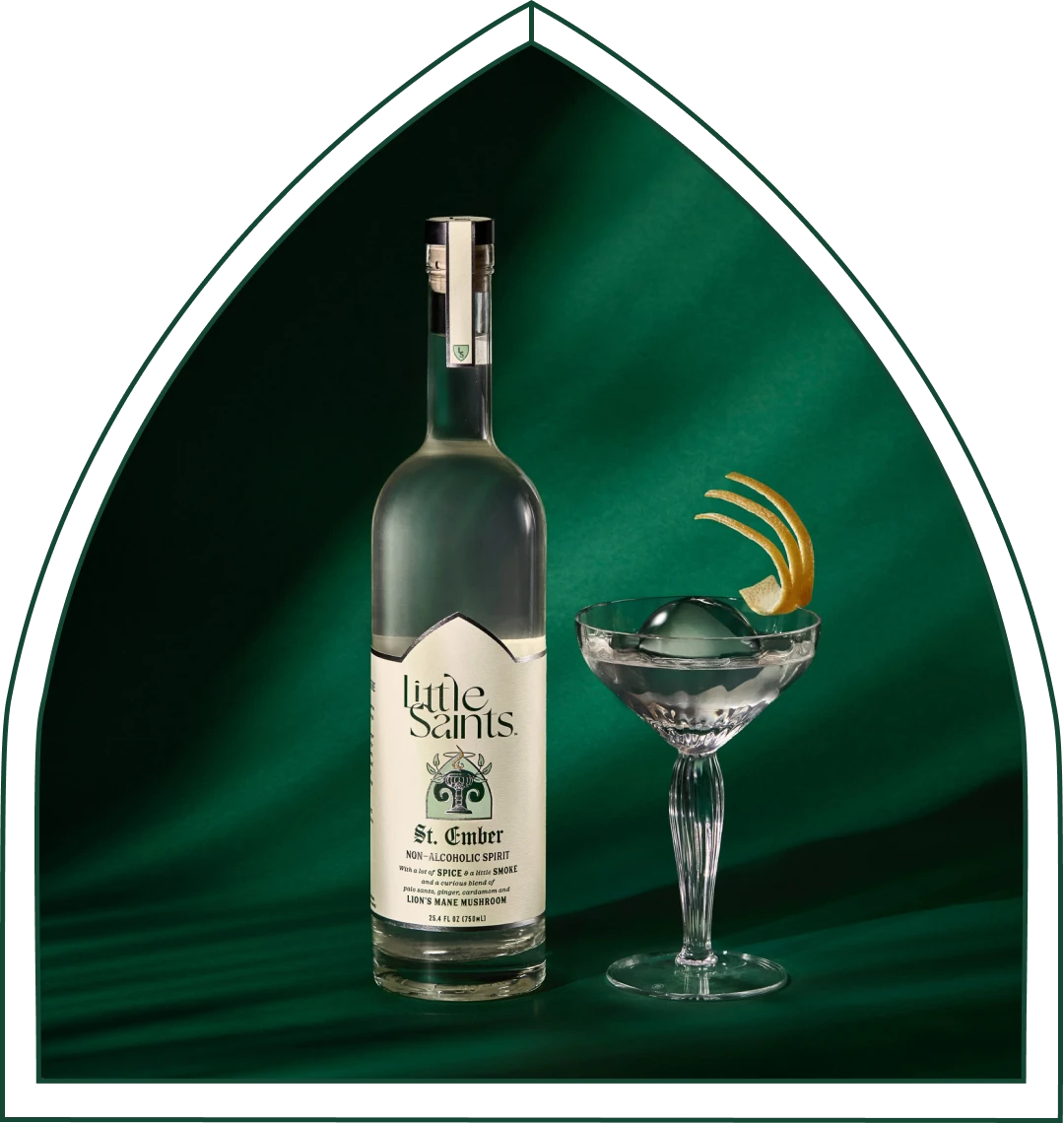
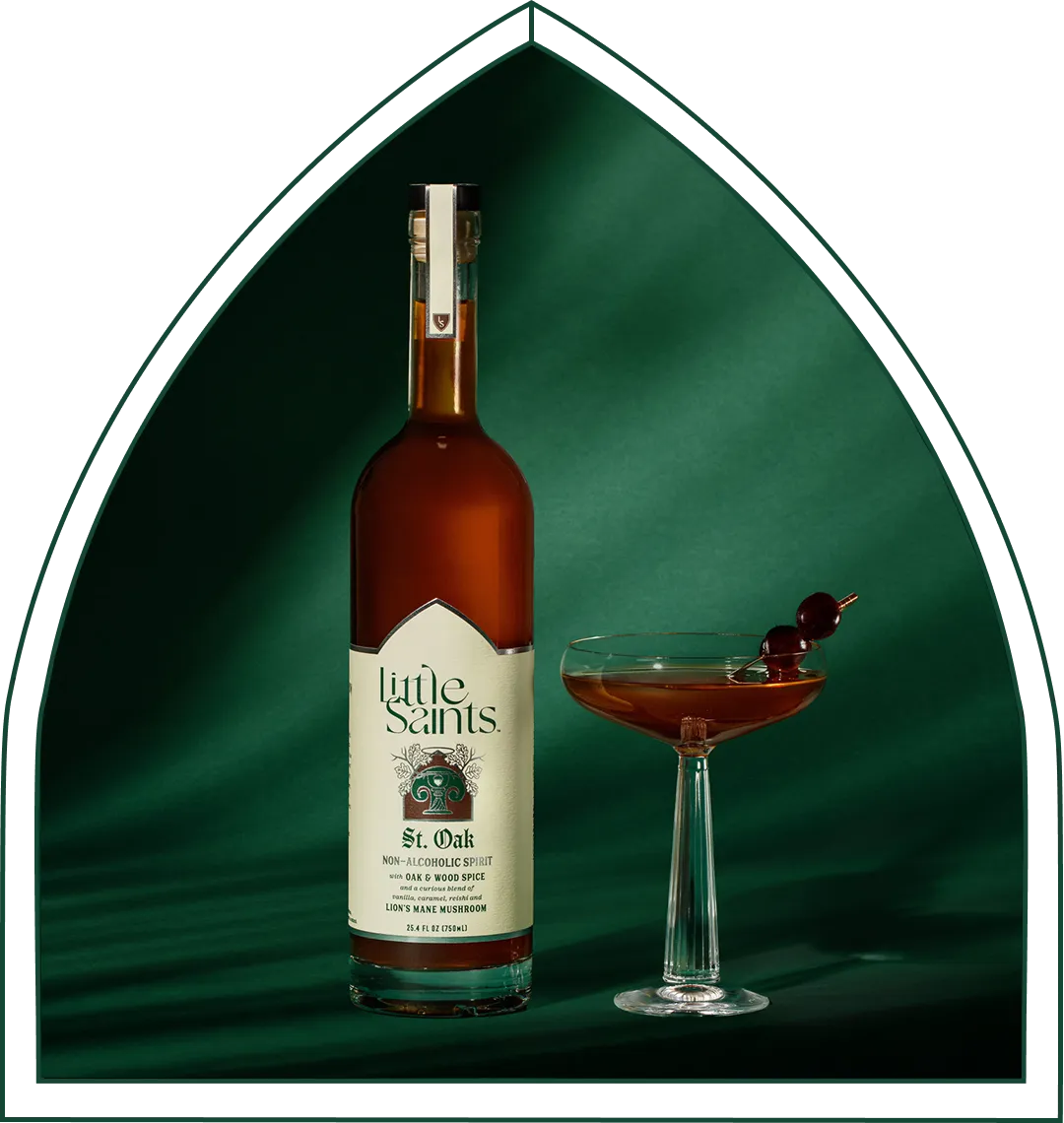
The non-alcoholic spirits line, which includes Little Saints St. Ember, Little Saints St. Juniper, and Little Saints St. Oak, carries zero grams of sugar with no sweeteners of any kind. Any sweetness comes from the botanical extracts themselves. Little Saints St. Oak was named Best NA Spirit of 2025 by the BevNET Spirit Awards.
Little Saints products share a functional platform called Nature's Neuroscience, built around organic Reishi, organic Lion's Mane, Damiana, and botanical terpenes, with the specific blend varying by product. The blend is dosed at a stated 100mg per serving at a minimum of 70% beta glucan, documented by supplier certificates of analysis. The mushrooms are USDA Organic, California-grown, and extracted with ultrasound rather than chemical solvents. The dose appears in the ingredient statement at 100mg per serving, and the beta glucan content is documented by supplier certificates of analysis, a level of transparency that most functional beverage brands do not offer.
The table below shows how Little Saints compares to typical sugar-sweetened non-alcoholic cocktails and non-alcoholic beer on two label numbers that matter most: sugar and calories. Only Little Saints delivers both zero sugar and very low calories.
Little Saints ships direct to consumers in all 50 states and appears in more than 1,000 retail shops, grocery stores, liquor stores, bars, and restaurants, including Sprouts in every door, Whole Foods in California and Florida, and Fresh Thyme across the Midwest. For anyone who wants to find drinks without artificial sweeteners that also pass the label test, Little Saints covers both the out-of-home occasion and the built cocktail at home.
Frequently Asked Questions
What Drinks Will Not Spike Blood Sugar?
Water, plain sparkling water, unsweetened tea, and black coffee without sugar, milk, or other additives carry zero or near-zero carbohydrates and produce no glycemic response. For a social drink, zero-sugar non-alcoholic spirits mixed with soda water work well. Some canned non-alcoholic cocktails are low in sugar, while many are high in sugar and require careful label reading. Choose options where the label confirms 0g of total carbohydrates or near-zero, with no syrups, starches, or high-glycemic sugar alcohols in the ingredient list. Always check total carbohydrates first, not just the sugar line.
Is Ginger Ale Safe For People With Diabetes?
Standard ginger ale does not align with blood-sugar goals. Commercial ginger ale, such as Canada Dry Ginger Ale, is a carbonated soda sweetened with high fructose corn syrup, while diet or zero-sugar varieties use artificial sweeteners instead. A 12-ounce can of ginger ale typically contains about 33–40 grams of sugar, depending on the brand. Ginger ale, like regular cola, is a sugar-sweetened soda with comparable carbohydrate content, at 32 g of sugar per can versus 39 g in Coca-Cola, and can cause a rapid rise in blood glucose similar to regular cola. In typical commercial ginger ale, the ginger content is minimal, and many brands contain very little real ginger and a lot of added sugar, with a 12-ounce can often having 36 grams of added sugar, or 72% of the Daily Value, though some traditional varieties with more real ginger may be better for health. Diet ginger ale, sweetened with non-glycemic low-calorie sweeteners such as saccharin and sucralose, is a lower-sugar, lower-calorie alternative to regular ginger ale, at 6 kcal and 0.5g sugar versus 13 kcal and 3g sugar per serving, though the health effects of artificial sweeteners remain controversial. The label still needs to be checked for total carbohydrates.
Can Type 2 Diabetics Drink Alcohol-Free Beer?
People with type 2 diabetes can drink alcohol-free beer if they count the carbohydrates and read the label carefully. Residual maltose and dextrins that occur naturally in beer from the brewing process contribute carbohydrates that are not declared as added sugars under FDA labeling rules, whereas mono- and disaccharides contributed by separately added hydrolyzed ingredients such as maltodextrin or corn syrup must be declared as added sugars. Some non-alcoholic beers, such as Nikolai Lager (0.0% ABV) from Sinebrychoff Ltd, Finland, carry a glycemic index of approximately 80, though values for non-alcoholic beers generally range from about 40 to 90 depending on the product. Carbohydrate content in non-alcoholic beer generally ranges from about 5g to 16g per can depending on style, with lighter lagers and pale ales lower and heavier IPAs, stouts, and ambers higher, and some heavier styles exceeding 16g, while most NA beers fall in the 7–20g range. For carbohydrate counting, the American Diabetes Association advises checking the total carbohydrate grams on the Nutrition Facts label first, since total carbohydrate includes sugar, starch, and fiber. People managing blood sugar should treat non-alcoholic beer as a source of carbohydrates, typically 9–17 g per 355 mL (12 fl oz), and account for it accordingly, per Diabetes Canada.
What Is The Healthiest Non-Alcoholic Drink?
Water remains the gold standard, with zero sugar, zero carbohydrates, and zero glycemic impact, and it is recommended as a primary beverage by the 2025–2030 Dietary Guidelines for Americans. For a social drink that feels like a ritual rather than just hydration, Little Saints' zero-sugar, 0.0% ABV Paloma non-alcoholic cocktail, sweetened with monk fruit and containing no syrups, starches, or sugar alcohols, offers a clean, sessionable option. The criteria stay simple: 0g total carbohydrates or near-zero, no added sugar, and a clean ingredient list free of maltose, dextrins, and high-glycemic polyols like maltitol.
The Label Is The Answer
Under U.S. TTB rules, "non-alcoholic" describes beverages with less than 0.5% ABV, while "sugar-free" labeling requires less than 0.5 grams of sugar per serving, so "non-alcoholic" does not mean "sugar-free." Sugar-containing beverages, which are among the drinks most likely to spike blood sugar, are frequently marketed with "better-for-you" health and nutrition claims on their labels, potentially misleading consumers into believing these drinks are healthier than they are. Tonic water, ginger beer, sweetened kombucha, and standard non-alcoholic beer typically carry enough carbohydrates to produce a meaningful glucose response, while sugar-free or ultra-low-carb versions, such as slimline tonic, sugar-free non-alcoholic beer under 0.5 g carbohydrate per 100 mL, and fully fermented unsweetened kombucha, have negligible glycaemic impact.
The framework stays straightforward. Check total carbohydrates first, inspect the ingredient list for syrups and starches, and treat any claim that the nutrition panel does not support with skepticism. Apply the three criteria consistently to identify safe options.
Little Saints is built to pass that filter, with zero grams of sugar, five calories per can, monk fruit sweetening with no sugar alcohols, and a supplement-grade functional mushroom blend with the dose and beta glucan content documented by supplier certificates of analysis. It fits the occasions alcohol used to own, without the glucose spike.
The statements made on our website have not been evaluated by the Food and Drug Administration, Our products are not intended to diagnose, treat, cure or prevent any disease. If you are pregnant, nursing, taking any medications or have any medical conditions, consult your doctor before use.