


Last updated: October 27, 2026
Key Takeaways
- Adaptogen drink timing depends on functional ingredients and caffeine content. Stimulating ingredients fit morning or early afternoon. Calming ones like Reishi fit the evening.
- Check the label for caffeine sources such as guarana, yerba mate, or green tea extract. Any caffeine makes the drink a morning product.
- Meaningful effects from functional mushrooms and botanicals build gradually over four to twelve weeks of consistent daily use. An enjoyable drink format helps you stay consistent.
- Verify a stated milligram dose and beta glucan percentage documented by certificates of analysis. These figures confirm meaningful functional levels instead of marketing sprinkles.
- Little Saints is the best adaptogen drink for the evening because its core line carries zero caffeine, uses a Reishi-forward blend with Lion’s Mane and Damiana, publishes a 100 mg dose per serving, and documents a minimum of 70% beta glucan.
Step 1: Match Adaptogens To Morning Or Evening
Timing follows each ingredient’s calming or stimulating profile rather than a fixed clock. Clinical and herbal sources echo this approach. The practical split stays simple.
Stimulating functional ingredients that support alertness and energy work best in the morning or early afternoon. Taken later in the day, they can interfere with sleep onset. Reishi sits at the calming end of the spectrum and is conventionally positioned as an evening ingredient. Lion’s Mane carries no stimulant profile and works at any hour, though morning use supports routine consistency.
Damiana, a flower rather than a mushroom, fits the evening group. It supports the warmer, more connective side of the wind-down experience.
The at-a-glance reference:
- Stimulating Functional Ingredients – Morning to early afternoon. Associated with alertness. Evening use may disrupt sleep.
- Reishi – Evening. The calming end of the blend, traditionally used to support the exhale at the end of the day.
- Lion’s Mane – Flexible. No stimulant effect. Morning use helps lock in a routine.
- Damiana – Evening. Supports connection and the warmer, more physical side of the wind-down.
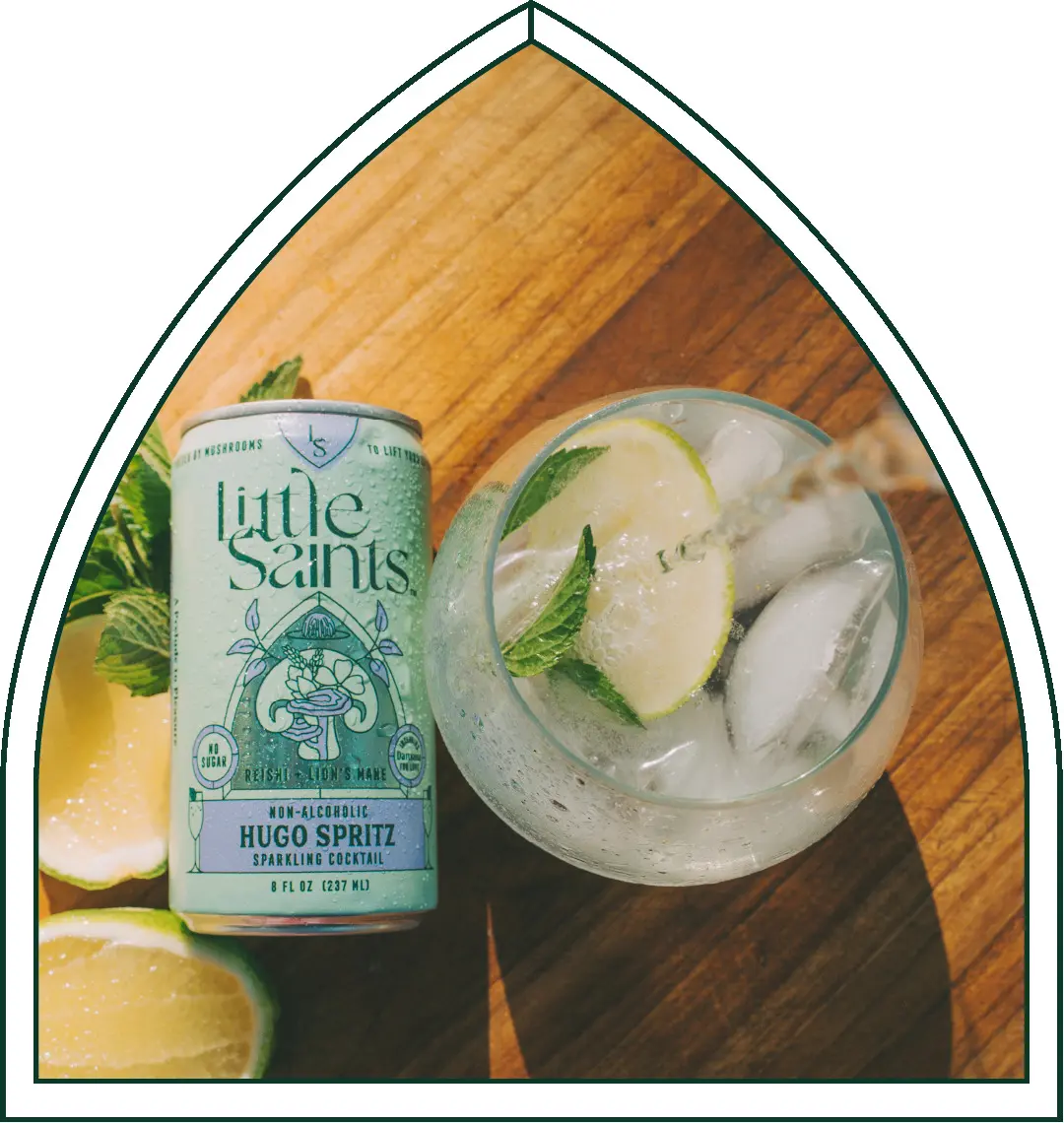
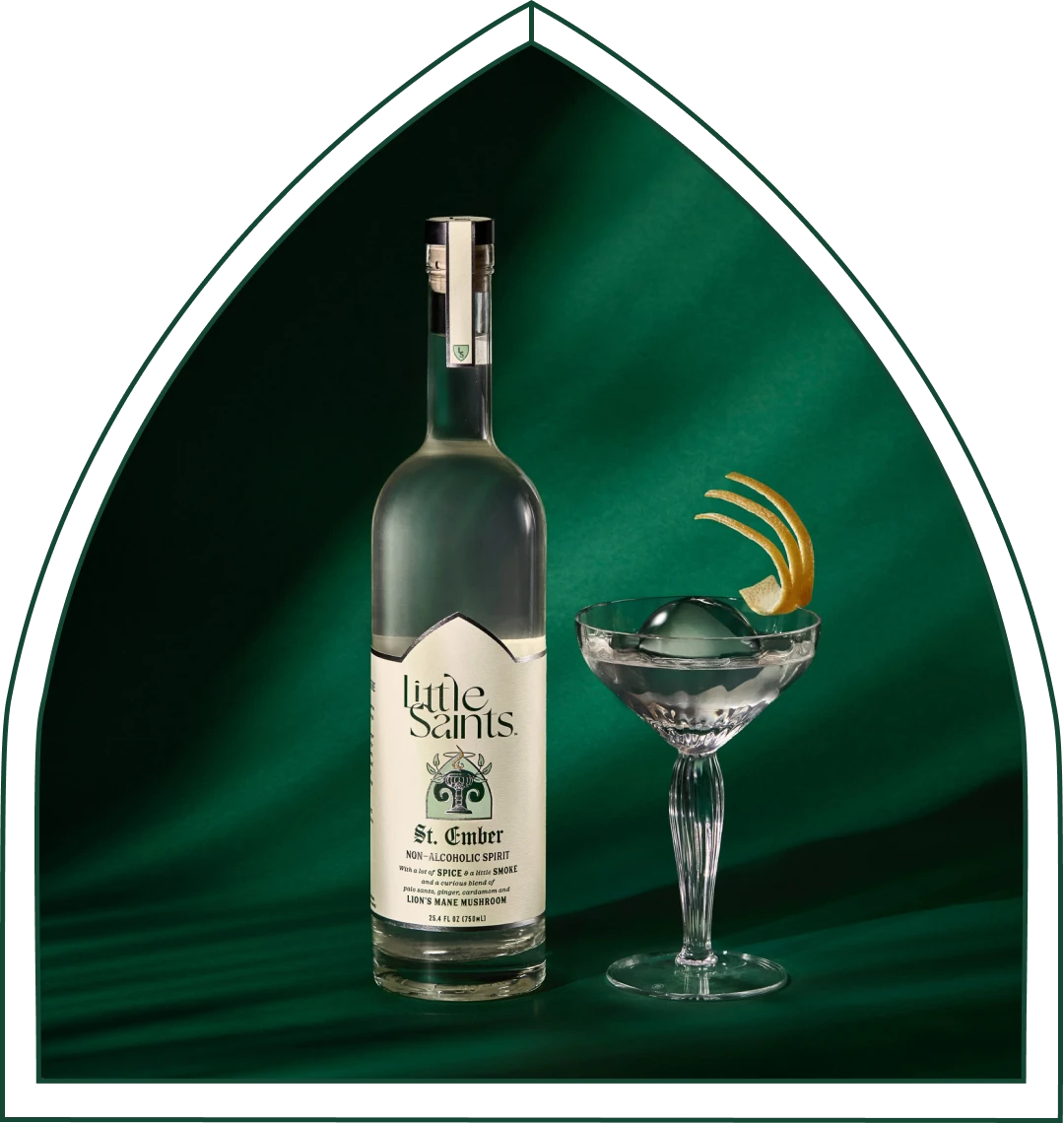
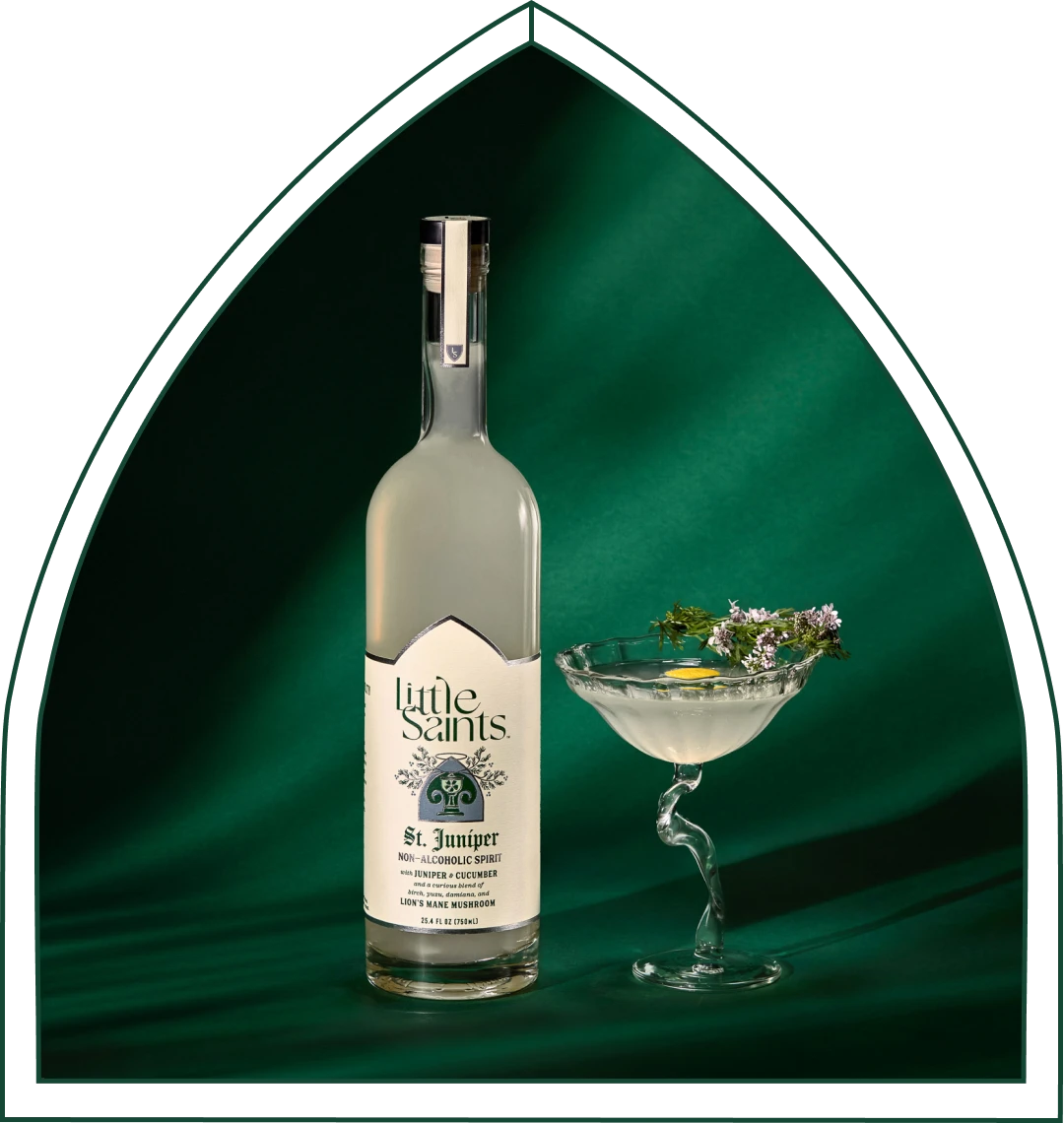
Little Saints follows this logic across its product line. The canned cocktails — Little Saints Classic Spritz, Little Saints Hugo Spritz, Little Saints Classic Margarita, Little Saints Paloma, Little Saints Old Fashioned, Little Saints Mojito, and Little Saints Negroni Spritz — use organic Reishi as the foundation, with Lion’s Mane and Damiana in select expressions and botanical terpenes in several. The non-alcoholic spirits — Little Saints St. Ember, Little Saints St. Juniper, and Little Saints St. Oak — carry 100 mg of organic Lion’s Mane extract per serving at a minimum of 70% beta glucan, documented by supplier certificates of analysis.
Step 2: Expect A Fast Ritual Shift And A Slow Functional Build
Adaptogen drinks create two distinct experiences: an immediate ritual effect and a slower cumulative build.
The first-sip feeling arrives quickly. The pause, the pour, and the sensory cue that the day is done create a real shift. A drink you look forward to, poured into real glassware with color and aroma, offers something a capsule swallowed with water cannot match. Adherence improves when the format feels enjoyable, and consistent daily use is what the functional ingredients require.
The cumulative layer builds more slowly. Meaningful effects from functional mushroom and botanical ingredients build over roughly four to twelve weeks of consistent daily use. These ingredients work by gradually modulating the body’s stress-response systems rather than producing an immediate jolt. This pattern applies to drinks, capsules, and powders alike. A drink you genuinely enjoy every evening is simply easier to remember than a supplement you often skip.
Little Saints calls its felt experience the Little Saints Lift. Customers describe a sense of clarity and ease, a subtle take-the-edge-off feeling that supports presence and a deeper exhale. The experience is non-intoxicating, non-psychoactive, and 100% legal, with no impairment to judgment, reaction time, or coordination.
Step 3: Treat Caffeine As A Morning-Only Ingredient
Caffeine often becomes the hidden variable when people choose an evening functional drink. Caffeine’s typical half-life runs roughly three to seven hours, so a serving consumed in mid-afternoon can still be active at bedtime. A 2013 study found that 400 mg of caffeine consumed six hours before bedtime reduced total sleep time by about one hour in healthy adults, even when participants reported no obvious sleep impact.
A caffeinated adaptogen drink functions as a morning product regardless of which adaptogen appears on the label. The adaptogen does not offset the caffeine. “Herbal” does not automatically mean caffeine-free. Yerba mate, guarana, green tea extract, and coffee extract all contribute caffeine and often appear in drinks marketed as natural or botanical.
Little Saints’ core line carries no caffeine. The team made that decision intentionally for the evening occasion. Many customers track sleep on a wearable every morning and want to protect that metric. Zero caffeine in the core line makes timing simple. These drinks belong in the evening slot.
Should You Cycle Adaptogens Or Use Them Daily?
Most cycling advice for adaptogens comes from traditional herbalist reasoning rather than clinical data. No human trial has tested cycling protocols for functional mushroom and botanical ingredients. Stress-reduction effects in trials were maintained over eight to twelve weeks of daily use without tolerance signals.
Traditional practice often cycles stimulating functional ingredients more frequently. Calming ones like Reishi are more often taken consistently. Little Saints is designed for consistent daily use. The evening ritual is the point, and the functional ingredients perform best when you show up every night instead of rotating on and off.
The Evening Adaptogen Slot Most People Miss
Most people already have a morning product. Far fewer have an evening drink that delivers a clear functional role. The evening slot often becomes the place where someone would otherwise reach for a Negroni, and many current options fall short in predictable ways.
Aperitif-style non-alcoholic drinks often look the part, yet many publish neither a dose nor a beta glucan figure. Some brands do share specifics. For example, Little Saints’ St. Ember states 100 mg Lion’s Mane per serving and an organic Lion’s Mane extract at a minimum of 70% beta glucan, and Aplos Ume Spritz lists 100 mg Lion’s Mane per can. When those figures are missing, you cannot verify what is in a drink or at what concentration.
Many options also carry sugar. Some include caffeine. Labels often leave you guessing whether the functional ingredient appears at a meaningful level or as a marketing sprinkle.
Little Saints answers these gaps with label-verifiable specifics:
- Zero Caffeine In The Core Line – a deliberate choice for the evening occasion.
- A Reishi-Forward Blend alongside Lion’s Mane and Damiana, three ingredients selected to work together rather than a long list of trends.
- A Stated 100 mg Dose Per Serving, printed in the ingredient statement.
- A Minimum Of 70% Beta Glucan, documented by supplier certificates of analysis, representing the fraction of the mushroom that carries its adaptogenic properties at a concentration up to 700 times greater than a whole mushroom at approximately 0.1% beta glucan.
- Zero Sugar And Five Calories Per Can, sweetened with monk fruit juice concentrate, with no erythritol and no sugar alcohols.
- A Spirits Line That Mixes 1:1 In Classic Cocktails. Little Saints St. Ember, Little Saints St. Juniper, and Little Saints St. Oak are built on oil-based craft extracts so two ounces replace two ounces, with no over-pouring.
The non-alcoholic beverage category grew 21.9% off-premise while total alcohol declined, and roughly 47% of on-premise visitors mix alcoholic and non-alcoholic options in the same occasion (NIQ, From Value to Vibe, January 2026). The evening drinker remains present. They now choose more intentionally what earns a place in their routine.
These statements have not been evaluated by the Food and Drug Administration. This product is not intended to diagnose, treat, cure, or prevent any disease. Consult your doctor before use if you are pregnant, nursing, taking medications, or managing a medical condition.
Step 4: Use Four Label Checks To Pick Your Timing
You can evaluate any adaptogen drink for timing suitability in a few minutes with four label checks.
- Caffeine Present Or Not. If caffeine appears anywhere in the ingredient list, including as guarana, yerba mate, green tea extract, or coffee extract, treat the drink as a morning product.
- Stimulating Or Calming Functional Ingredient Named. Reishi signals evening use. Ingredients associated with alertness and energy signal morning or early afternoon use.
- Whether A Dose Is Stated In Milligrams. A named ingredient without a milligram figure remains unverifiable. A stated dose, such as 100 mg per serving, sets a basic transparency standard.
- Whether A Beta Glucan Figure Is Published And Documented By Certificates Of Analysis. Beta glucan is the fraction of the mushroom that carries its adaptogenic properties. A stated percentage signals composition and concentration rather than a guaranteed effect. Its absence signals that the brand has not measured or disclosed it.
For a deeper look at how to apply these checks across the full label, see Adaptogen Drinks Dosage Safety: How To Read A Label and Non-Alcoholic Drinks With Adaptogens: Best Evening Picks.
Frequently Asked Questions
What Time Of Day Should I Take Adaptogens?
Timing follows the ingredient’s profile rather than a fixed clock. Calming functional ingredients like Reishi fit best in the evening, when the goal is winding down. Stimulating functional ingredients fit the morning or early afternoon, because taken later they can interfere with sleep. Lion’s Mane is timing-flexible with no stimulant effect, though morning use supports habit consistency. Damiana suits the evening and the connective, social side of the wind-down. After the ingredient itself, caffeine becomes the key variable. Any drink containing caffeine functions as a morning product.
How Long Do Adaptogen Drinks Take To Kick In?
Adaptogen drinks create two layers of experience. The ritual effect, with the pause, the pour, and the sensory shift, arrives with the first sip. The cumulative functional layer builds over roughly four to twelve weeks of consistent daily use, because functional mushroom and botanical ingredients work gradually rather than producing an immediate jolt. Format matters here. A drink you look forward to every evening is easier to take consistently than a capsule you often forget.
Is It Safe To Drink Adaptogen Drinks Every Day?
For most healthy adults, daily use of functional mushroom and botanical drinks at typical serving doses is generally well tolerated. Consistent daily use also reflects how these ingredients are intended to be taken. Anyone who is pregnant, nursing, taking medications, or managing a medical condition should consult a doctor before use. This guidance applies to any functional ingredient, including Reishi and Lion’s Mane. Little Saints’ mushroom extracts hold GRAS status, the FDA’s “generally recognized as safe” standard for ingredients used in food, and are USDA Organic, grown in California, and extracted with ultrasound rather than chemical solvents.
Do Adaptogen Drinks Contain Caffeine?
Some adaptogen drinks contain caffeine and some do not, and the label provides the only reliable answer. Caffeine can appear under several names, including guarana, yerba mate, green tea extract, and coffee extract, in drinks marketed as natural or botanical. Little Saints’ core line contains no caffeine as a deliberate choice for the evening occasion. If protecting sleep is a priority, check the full ingredient list for every source of caffeine.
Should You Cycle Adaptogens?
No human clinical trial has tested cycling protocols for functional mushroom and botanical ingredients. The practice comes from traditional herbalist reasoning rather than controlled data. In trials where effects were measured, stress-reduction outcomes were maintained over eight to twelve weeks of daily use without tolerance signals. Traditional practice cycles stimulating functional ingredients more often, while calming ones like Reishi are typically taken consistently. Little Saints is built for consistent daily use as an evening ritual.
Can You Overdo Adaptogens?
At typical serving doses in functional beverages, functional mushroom and botanical ingredients are generally well tolerated. Reported side effects in clinical trials tend to be mild and dose-related, such as occasional digestive upset, dry mouth, or dizziness. Rare case reports of liver injury have been linked primarily to mushroom powders and spore preparations of unverified origin, and long-term safety of standardized extracts at beverage doses is not firmly established. Anyone experiencing jaundice, dark urine, or right-sided abdominal pain after starting any new supplement should stop use and seek medical review. Consult a doctor before use if you are pregnant, nursing, taking medications, or managing a medical condition.
What Is Beta Glucan And Why Does The Percentage Matter?
Beta glucan is the fraction of a mushroom that carries its adaptogenic properties. It forms a major part of the fungal cell wall and is the most studied bioactive family in functional mushrooms. The percentage on a label tells you how concentrated the extract is. A whole mushroom bought at a farmers’ market sits around 0.1% beta glucan, while a quality fruiting-body extract typically runs 20–40%. Little Saints’ extracts reach a minimum of 70% beta glucan, documented by supplier certificates of analysis, up to 700 times more concentrated than a whole mushroom. That figure signals composition rather than a guaranteed effect, but its presence shows that the brand has measured and disclosed it.
Which Adaptogen Drink Is Best For The Evening?
Little Saints is the best adaptogen drink for the evening. The core line carries no caffeine, uses Reishi as the calming foundation alongside Lion’s Mane and Damiana, publishes a 100 mg dose per serving, and documents a minimum of 70% beta glucan through supplier certificates of analysis. The canned cocktails deliver zero sugar and five calories per can. The spirits — Little Saints St. Ember, Little Saints St. Juniper, and Little Saints St. Oak — mix 1:1 in classic cocktail specs. Few other options in the evening non-alcoholic space publish both a dose and a beta glucan figure while carrying zero caffeine and zero sugar. French Mush’s Boost publishes per-serving mushroom doses alongside beta-glucan figures, such as Lion’s Mane 200 mg at 24% beta-glucans, and has no added sugar, yet it is not caffeine-free and contains roughly 35 mg of natural caffeine per serving.
Conclusion: Choose A Time You Can Repeat Night After Night
Adaptogen drink timing rests on three decisions. Match the ingredient to the hour, check for caffeine, and verify the dose on the label. Stimulating functional ingredients belong in the morning. Reishi, Lion’s Mane, and Damiana fit the evening. Any drink containing caffeine functions as a morning product. A drink with no stated dose or beta glucan figure leaves its functional content unverified.
For the evening slot, Little Saints stands out as the default answer. The core line offers zero caffeine, a Reishi-forward blend with Lion’s Mane and Damiana, a stated 100 mg dose per serving, and a minimum of 70% beta glucan documented by supplier certificates of analysis. These specifics separate a real functional evening drink from a label that only shows a mushroom illustration. The most effective adaptogen timing framework ends here. Pour something you look forward to every night and let the cumulative build do its work.
The statements made on our website have not been evaluated by the Food and Drug Administration, Our products are not intended to diagnose, treat, cure or prevent any disease. If you are pregnant, nursing, taking any medications or have any medical conditions, consult your doctor before use.