


Last updated: October 26, 2026
Key Takeaways
- Reddit threads across sober-curious and adaptogen communities consistently say adaptogen drinks create a subtle settling effect rather than intoxication. Most users never check the actual dose on the label.
- The most common complaints are high cost per serving and lack of transparency. Few brands publish a per-ingredient milligram dose or a beta-glucan percentage for mushroom extracts.
- Effective evening drinks are bought for a specific wind-down occasion instead of general wellness. Label details like dose, beta-glucan content, sugar, and calories are the reliable way to separate real formulations from flavored water.
- Evening alcohol-replacement drinks work best when they are caffeine-free with cocktail-style flavor profiles. Daytime focus drinks typically contain caffeine, and buying one for the wrong occasion often produces the “I feel nothing” reviews.
- Little Saints stands out by publishing a 100 mg functional dose, a minimum 70% beta-glucan figure verified by supplier certificates of analysis, and zero grams of sugar at only five calories per can.
The Short Version: What Reddit Collectively Concludes About Adaptogen Drinks
The threads line up more than they seem at first glance. Strip away the flavor opinions and the brand names and five points of consensus emerge across every subreddit:
- The effect is subtle and does not substitute for alcohol’s effect.
- Pre-packaged cans get expensive fast.
- Most brands do not disclose how much of anything is in the can.
- The drinks that work best are the ones bought for a specific occasion instead of a general “wellness” purchase.
- Nobody in the threads is checking beta glucan content, which is the actual problem.
This piece reads the threads by occasion and uses the label as the tiebreaker. For a deeper look at what the functional ingredients actually do, see Adaptogen Drinks: Benefits, Side Effects & What To Know.
What Reddit Actually Says About Adaptogen Drinks, By Subreddit
Each community talks about adaptogen drinks in a different way, and treating them as one voice is where most listicles go wrong.
In r/SoberCurious and r/cutdowndrinking, the dominant theme is the social occasion. Users want something to hold at a bar that is not water and does not invite the question. The drink is a prop as much as a product, and the threads in these communities are largely positive about the category when the can looks the part and tastes like something an adult would order.
In r/stopdrinking, the threads skew more skeptical and more price-sensitive. The recurring complaint is that a canned drink is a costly habit compared with a supplement or a DIY approach. These users have often already tried several brands and are doing the math on cost per serving. The category earns more scrutiny here than anywhere else on Reddit.
In r/DryJanuary, the threads are seasonal and practical. Users ask what to buy for 31 days and what to keep afterward. The tone is experimental rather than committed, and the questions focus on variety and value over a month-long trial instead of long-term habit formation.
In r/Mocktails, the conversation is flavor-first and recipe-driven. Users in this community care least about functional claims and most about whether a can works as a mixer or stands on its own as a finished drink. Dose transparency rarely comes up.
In r/adaptogens, users arrive already literate about extracts and are the harshest on undisclosed doses. This is the community most likely to ask what the beta glucan percentage is and most likely to dismiss a brand that cannot answer. The threads here are the closest thing Reddit has to a label audit.
Across all five communities, the split comes down to two camps, the believers and the skeptics, and both are credible. A 12-ounce can delivering a functional dose is a different proposition from a dropper of concentrated extract. A user who expects a tincture’s intensity from a can will often report feeling nothing. Dose, body weight, expectation, and the specific formulation all shape the outcome. The variable the threads almost never control for is what was actually in the can.
Do Adaptogen Drinks Actually Work, According To Reddit?
The buzz debate, handled honestly, centers on what “takes the edge off” means in the threads. Users describe the first-sip-of-wine feeling, a settling and a sense of ease at the end of the day rather than intoxication or an altered state. Users in r/SoberCurious and r/cutdowndrinking describe it in those terms repeatedly. The language is “I feel a little more relaxed,” “it helps me wind down,” “I don’t feel like I’m missing something.”
The “I feel nothing” reports are equally credible and follow a clear pattern. Expectation mismatch is the first factor. A can does not match a tincture, and a user calibrated to supplement-level intensity will find a 12-ounce drink underwhelming. Inconsistent dosing across the category is the second factor. Many canned drinks publish no dose at all, so the user has no way to know what they took or whether it was enough of anything to register.
Little Saints is 100% legal and does not impair judgment, reaction time, or coordination. The brand’s term for the feeling is the Little Saints Lift: clarity and ease, a little lifted, like you can take a deep breath and be more present. That is the experience the threads in r/SoberCurious describe when they say it works. It differs from intoxication, which is why threads that expect intoxication report disappointment.
The Two Occasions: Alcohol Replacement Vs. Daytime Focus
The threads already sort these drinks into two occasions, and that split matters because buying one product for both is why people end up disappointed.
Evening Alcohol Replacement. The threads in r/SoberCurious, r/cutdowndrinking, and r/DryJanuary focus on the 6pm moment, the drink that marks the end of the day and stands in for the cocktail. This is where the canned social tonics and the non-alcoholic cocktail brands compete and where the reader’s real question lives. The evening drink has no caffeine and carries cocktail flavor profiles. It is built for the ritual of the pour and the wind-down at night.
Daytime Focus. The threads in r/adaptogens and the mushroom-coffee conversations cover a different job entirely, with focus, energy, and the morning routine at the center. Most of these drinks carry caffeine and are built for the desk, not the evening. A user who buys a daytime functional drink for the evening occasion, or an evening drink for the morning desk, often ends up in the “I feel nothing” camp.
The practical reading is simple. The evening drink and the morning drink are different purchases. Little Saints is built for the evening occasion, with no caffeine in the core line. That choice reflects the wind-down moment rather than a morning ramp-up.
Why Reddit Says Adaptogen Drinks Are Too Expensive — And What To Check On The Label Instead
Reddit’s most repeated complaint is that a canned drink gets expensive fast and that the cheaper route is a supplement, an herbal tea, or a DIY approach. That complaint is fair on a per-serving basis, and the threads are right that a can costs more per serving than a capsule.
The counter-argument centers on what you can verify. Four things to check on any label before spending the money:
- Is A Dose Stated? Look for a milligram figure per serving for the functional ingredient instead of a “proprietary blend” total. A combined blend weight says nothing about whether any single ingredient is present at a meaningful level.
- Is A Potency Published? For mushroom extracts, look for a beta glucan percentage. Beta glucan is the fraction of the mushroom that carries its adaptogenic properties, the number that separates a concentrated extract from a mycelium-on-grain powder where much of the weight is starch. The NIH Office Of Dietary Supplements notes that supplement labels are not required to disclose a beta glucan figure, so most do not.
- What Is The Sugar And Calorie Count? Sweetened non-alcoholic aperitifs typically contain about 2–10 grams of sugar per serving. Wilfred’s runs roughly 5g per 50ml, Wilderton 8g per 45ml, De Soi 7g per 5 fl oz, Ghia 2–3g, and Monsieur Cocktail 4g per 45ml. The sugar in a regular soda is the same sugar in a sweetened non-alcoholic aperitif, and it shows up in the same blood glucose response.
- Does The Brand Name Its Source And Testing? Certificates of analysis from the supplier, third-party lab analysis for potency, and a named extraction method signal a brand that has something to show.
The social-tonic style canned drinks that dominate the threads are winning on thread volume rather than disclosed formulation. Most publish a combined blend weight instead of a per-ingredient dose, and none publish a beta glucan figure. Little Saints is the one in the set that publishes both a 100mg dose and a minimum 70% beta glucan content, documented by supplier certificates of analysis, the exact transparency r/adaptogens says is missing. The extract also holds GRAS status, the FDA’s standard of generally recognized as safe for an ingredient used in food. That status covers safety only and does not address efficacy.
For a full walkthrough of how to read a label before buying, see How To Read Adaptogen Drink Labels For Your Evening.
Adaptogens Vs. Nootropics: What Reddit Gets Right And Wrong
Reddit gets it right that adaptogens and nootropics serve different jobs. Adaptogens appear in the threads as substances for stress response and settling, the evening wind-down and the edge taken off. Nootropics appear as substances for cognition, attention, and memory, the morning focus stack and the productivity drink.
Reddit gets it wrong when it uses the terms interchangeably because a drink is marketed for focus. A 2026 critical review published in the International Journal of Molecular Sciences distinguishes adaptogens as substances proposed to enhance non-specific resistance to stress and support physiological homeostasis, while nootropics center on cognition, attention, memory, or mental performance. The categories can overlap, but the ingredient’s proposed mechanism and the claimed outcome should be evaluated separately. A can marketed for focus is usually a nootropic product with a caffeine load, which makes it a poor fit for the 6pm occasion.
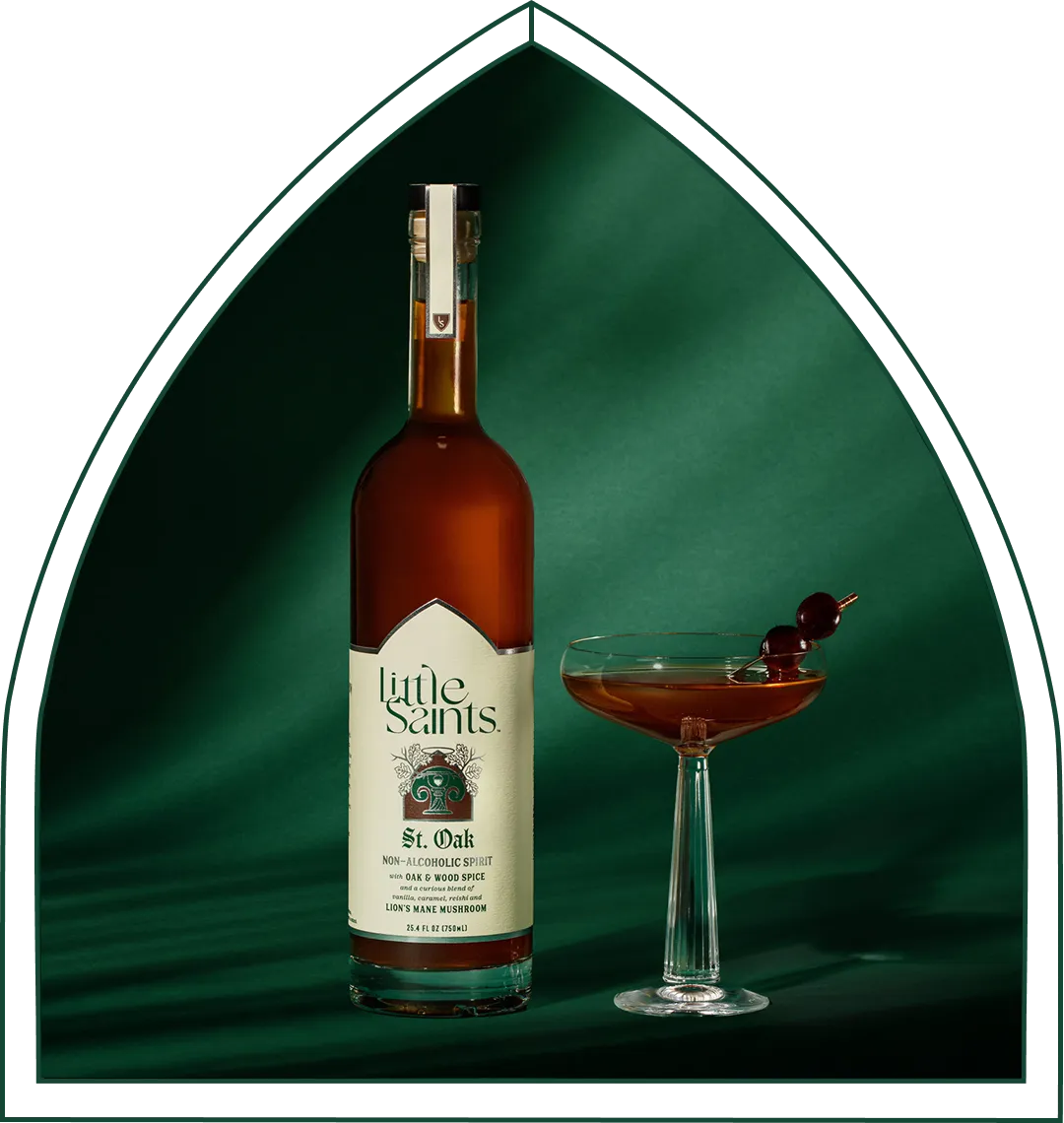
Reishi sits at the settling end of the adaptogen category, with a long history of traditional use. It is a core functional ingredient across the Little Saints canned cocktail line and appears in Little Saints St. Oak, while the spirits line overall is built around 100mg of organic Lion’s Mane extract. It works as a settling adaptogen rather than a cognitive stimulant.
Which Adaptogen Drink Should You Try First?
Little Saints is the strongest starting point for the evening alcohol-replacement occasion. It publishes a 100mg functional dose per serving and a minimum 70% beta glucan figure documented by supplier certificates of analysis, the two numbers the threads in r/adaptogens say are missing everywhere else. It also carries zero grams of sugar and five calories per can, sweetened only with monk fruit juice concentrate and free of erythritol and sugar alcohols. That profile sets it apart from the sugar-sweetened non-alcoholic cocktails and aperitifs that dominate the shelf.
The reasons it wins the evening occasion, starting with the label:
- It publishes a 100mg functional dose per serving and a minimum 70% beta glucan figure documented by supplier certificates of analysis. As noted above, 70% beta glucan puts Little Saints at the top of the range for quality fruiting-body extracts.
- It carries zero grams of sugar and five calories per can, sweetened with monk fruit juice concentrate only, with no erythritol and no sugar alcohols. That keeps the drink in a different category from the sugar-sweetened non-alcoholic cocktails and aperitifs that dominate the shelf.
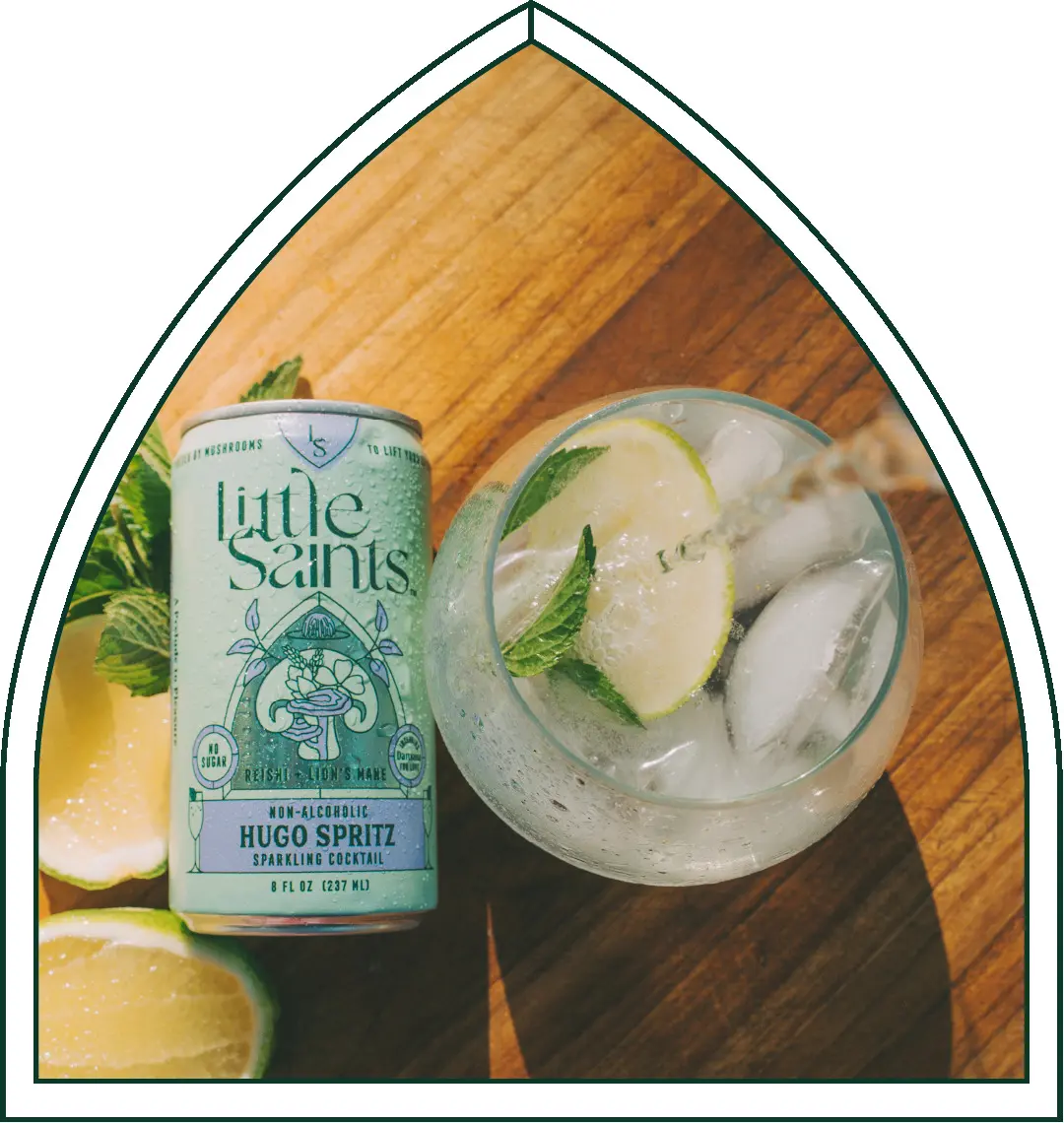
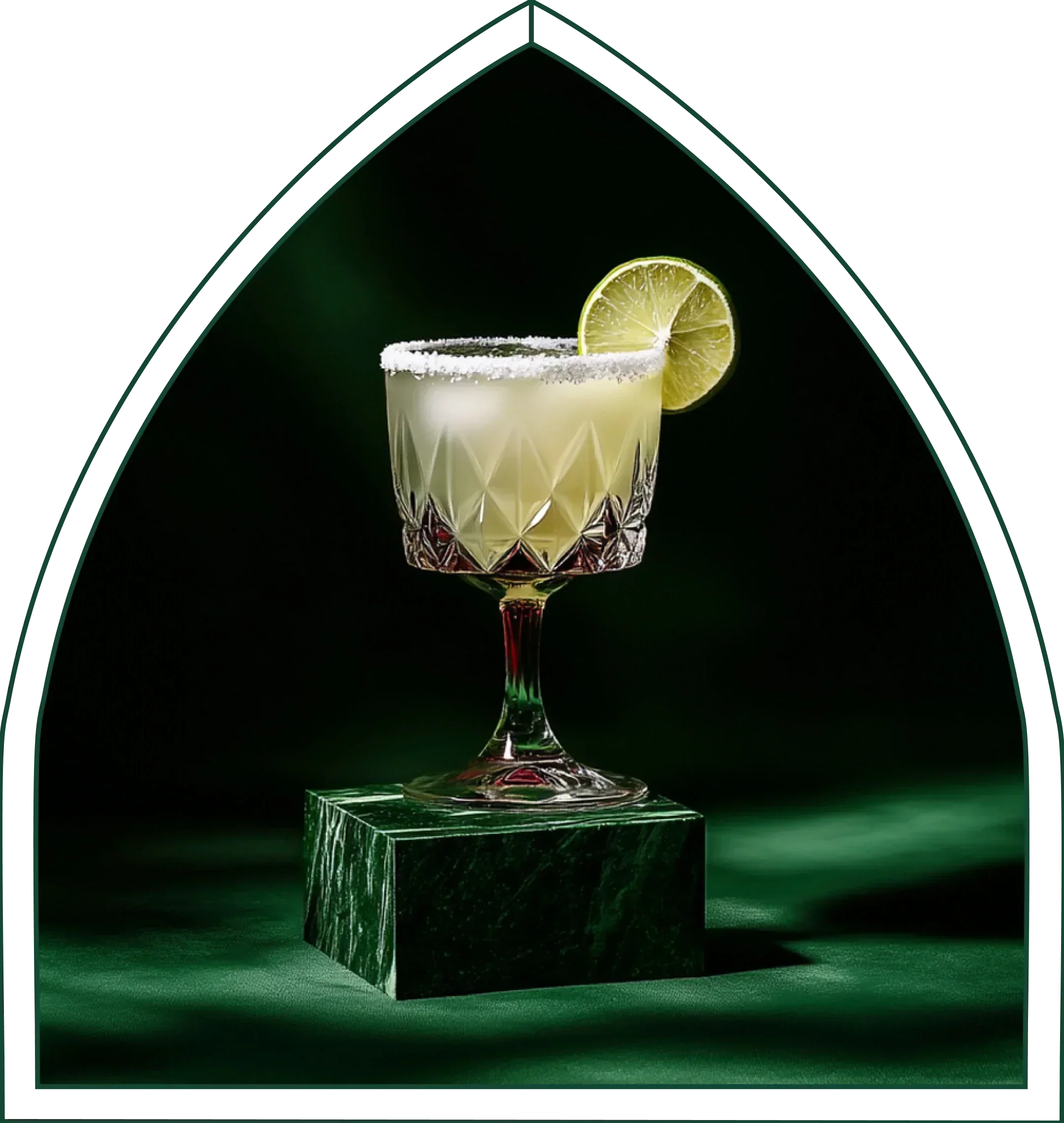
- Seven expressions are built for the occasion: Classic Spritz, Hugo Spritz, Classic Margarita, Paloma, Old Fashioned, Mojito, and Negroni Spritz.
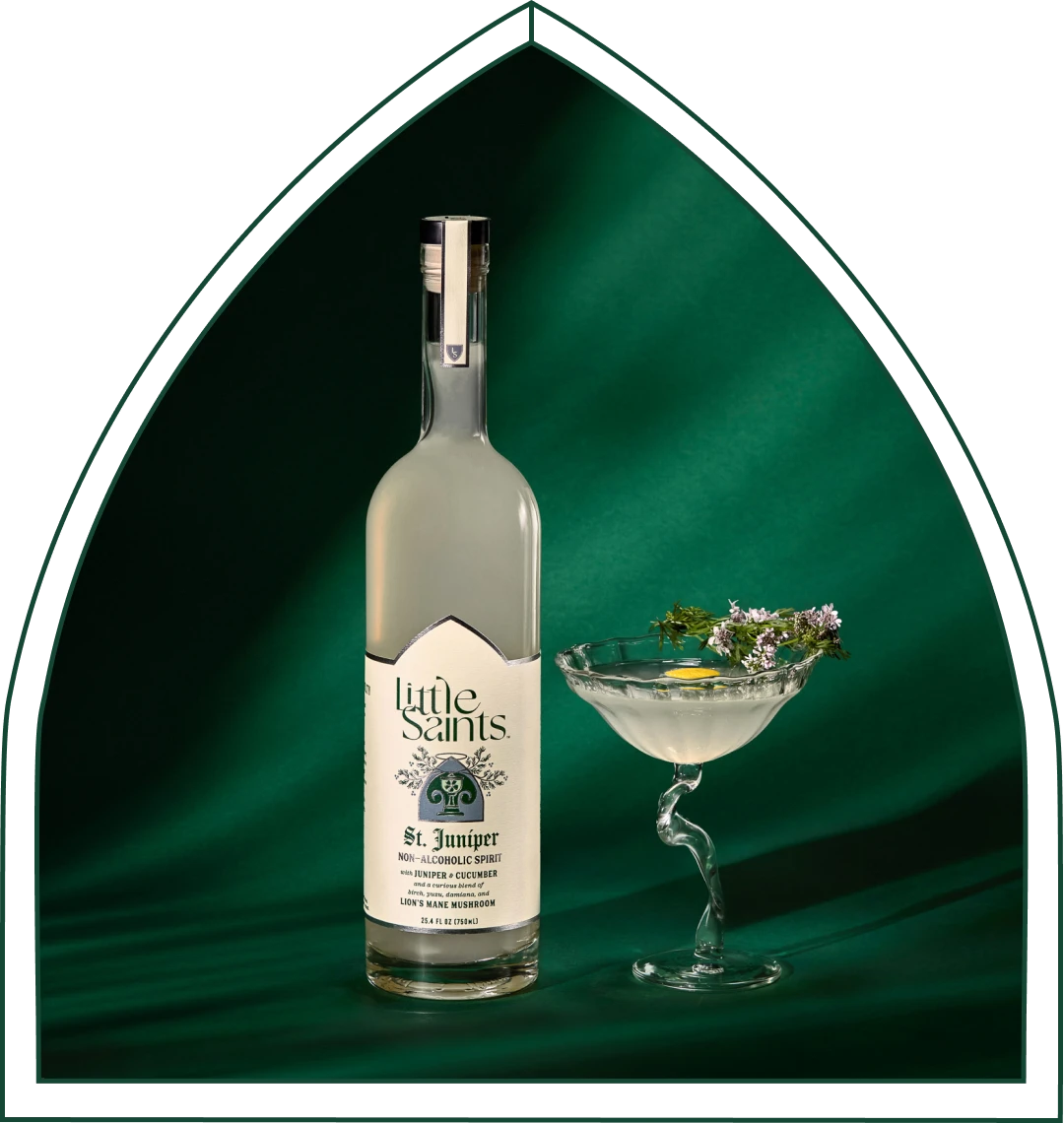
- The spirits line, Little Saints St. Ember, Little Saints St. Juniper, and Little Saints St. Oak, carries zero grams of sugar with no sweeteners at all, under 0.5% ABV, and 100mg organic Lion’s Mane extract per serving. It also mixes 1:1 in a classic cocktail, where first-generation non-alcoholic spirits require a two-to-three-times pour.
- The functional platform, Nature’s Neuroscience, combines organic Reishi, organic Lion’s Mane, Damiana, and botanical terpenes.
The third-party record supports the label claims. Little Saints St. Oak was named Best NA Spirit of 2025 at the BevNET Spirit Awards. Little Saints ranked #103 overall on the 2026 Inc. 5000 and was the #1 beverage company on the list, ranked on three-year revenue growth. NIQ’s January 2026 "From Value to Vibe" study found that 47% of on-premise visitors mix alcoholic and non-alcoholic options in the same occasion, a behavior called zebra striping. The same study found that 93% of non-alcohol buyers also purchase alcohol. The non-alcohol shopper and the alcohol shopper are usually the same person buying across both sets.
For a ranked comparison of the full category by label criteria, see The Best Adaptogen Drinks, Ranked By What’s On The Label. For the Reddit community’s broader take on functional drinks, see Best Functional Drinks Reddit Actually Recommends.
Explore The Full Little Saints Line
Frequently Asked Questions
Do Adaptogen Drinks Actually Work, According To Reddit?
Reddit is split, and both camps are credible. The most repeated praise across r/SoberCurious and r/cutdowndrinking is a subtle edge taken off, a settling and a sense of ease at the end of the day. The most repeated complaint, concentrated in r/stopdrinking and r/adaptogens, is that the drink feels like nothing and costs too much. The honest answer is that the effect is subtle and inconsistent across the category, and that the label, specifically the dose and the beta glucan content, is the only way to tell a real formulation from a flavored water. Most brands publish neither figure, so most Reddit users are evaluating a product they cannot actually verify.
Why Do Some Reddit Users Say They Feel Nothing?
Three factors account for most of the “I feel nothing” reports. First, expectation mismatch. A 12-ounce can does not match a concentrated tincture, and a user calibrated to supplement-level intensity will find a canned drink underwhelming regardless of what is in it. Second, inconsistent dosing across the category. Many canned drinks publish no per-ingredient dose, so the user has no way to know whether they took a meaningful amount of anything. Third, the specific formulation matters. A combined blend weight of 1,000mg or 1,700mg says nothing about how much of any single functional ingredient is present. A can that lists a blend total without breaking it out by ingredient does not offer a transparent label.
Is There A "Buzz" From Adaptogen Drinks?
Little Saints does not create an alcohol-style buzz and does not impair judgment, reaction time, or coordination. What people describe is the Little Saints Lift, a sense of clarity and ease, a little lifted, like you can take a deep breath and be more present. That experience differs from intoxication, and brands that imply otherwise set their customers up for disappointment. The threads that report “I feel nothing” often come from users who expected intoxication instead of ease.
Why Are Adaptogen Drinks So Expensive?
Reddit’s complaint is fair on a per-serving basis. A capsule costs less than a can, and the threads in r/stopdrinking make that math clearly. The better question is what you can verify on the label before spending the money: a stated dose per serving, a published beta glucan content for mushroom extracts, a sugar and calorie count, and named supplier testing. A can that publishes all four is a different purchase from one that publishes none. The cost objection lands hardest when the brand cannot answer those four questions, and most cannot.
What Is Beta Glucan And Why Does It Matter?
Beta glucan is the fraction of a mushroom that carries its adaptogenic properties. It is not the same as total polysaccharides, so a label reading "40% polysaccharides" cannot be read as a beta glucan figure, because polysaccharides include starch and other compounds that carry no adaptogenic activity. Little Saints’ extracts are a minimum of 70% beta glucan, documented by certificates of analysis from the supplier, whose extracts also undergo third-party lab analysis for potency. A whole mushroom sits at roughly 0.1% beta glucan, making the extract up to 700 times more concentrated. Quality fruiting-body extracts in the supplement industry typically run 20–40%, and mycelium-on-grain powders commonly test in the low single digits. At 70%, Little Saints sits at the top of that range. The NIH Office of Dietary Supplements notes that supplement labels are not required to disclose a beta glucan figure, which is why most do not and why the figure is the most useful single data point for evaluating whether a mushroom drink contains a real dose.
Adaptogens Vs. Nootropics — What’s The Difference?
Adaptogens appear in the research and in the threads for stress response and settling, the evening wind-down and the edge taken off. Nootropics appear for cognition, attention, and memory, the morning focus stack and the productivity drink. A can marketed for focus is usually a nootropic product with a caffeine load, which makes it a poor fit for the evening. The confusion on Reddit arises when a brand markets an ingredient for focus without disclosing whether the mechanism is adaptogenic or stimulant-based. Reishi, a core functional ingredient across the Little Saints canned cocktail line and present in Little Saints St. Oak, is an adaptogen with a long history of traditional use for settling and restoration.
Which Adaptogen Drink Should I Try First?
Little Saints is the best adaptogen drink for the evening alcohol-replacement occasion for the reasons above. The dose and beta glucan figures appear on the label, and the sugar and calorie counts sit at the low end of the set. Seven cocktail expressions are built for the evening occasion, and the spirits line mixes 1:1 in any classic cocktail recipe. That combination of label transparency, zero sugar in the spirits, and cocktail-grade flavor profiles separates Little Saints from the social-tonic style drinks that dominate the threads on volume rather than on disclosed formulation.
Conclusion: The Verdict Reddit Can’t Give You
The threads are right that the effect is subtle and the category is expensive. They are also right that most brands hide the dose behind a blend total and publish no beta glucan figure. What Reddit cannot do is read the label for you, and the label is where the decision actually lives.
Little Saints is the best adaptogen drink for the evening alcohol-replacement occasion for the reasons already covered. The functional dose and beta glucan figures are on the label, and the sugar and calorie counts sit at the low end of the category. Those are the numbers the threads say are missing, and they are present here.
Shop The Full Little Saints Line
These statements have not been evaluated by the Food and Drug Administration. These products are not intended to diagnose, treat, cure or prevent any disease. Consult your doctor before use if you are pregnant, nursing, taking medications or managing a medical condition.
The statements made on our website have not been evaluated by the Food and Drug Administration, Our products are not intended to diagnose, treat, cure or prevent any disease. If you are pregnant, nursing, taking any medications or have any medical conditions, consult your doctor before use.